
Artist / Band
Lucas Welsh
Biography
Lucas Welsh is a Métis fiddler, multi-instrumentalist, composer, recording musician, producer, teacher and luthier from Saskatchewan whose musical life has encompassed classical violin, old-time and Métis fiddle, bluegrass, country, western swing and jazz. Raised in the Blaine Lake area, Welsh pursued classical violin through the Royal Conservatory system and by the mid-1990s was travelling regularly to Prince Albert to study with respected violin instructor Dean Bernier. His ambitions at the time were firmly classical, with university studies and a possible orchestral career in his sights. Discovering that his technique was several years behind the level required for university entrance, he immersed himself in the instrument, completing approximately three years of classical study in two while working through music theory during the summers.
The intensity eventually took its toll. Welsh later recalled travelling to a lesson with his mother and suddenly admitting that he no longer wanted to continue. In 1999 he put the fiddle away, but rather than abandon music altogether he shifted his attention to guitar. He developed into a capable lead guitarist and harmony singer and travelled across Canada for a time with Steppin’ Out before eventually settling in Moose Jaw, where he worked as a mechanic. Away from the musical community he had known as a fiddler, Welsh began to miss the friendships and spontaneous music-making that surrounded the instrument. In 2002 he picked up the fiddle again, practised for the Saskatchewan provincial championships and finished second. The following year he returned and won the 2003 Saskatchewan Provincial Fiddle Championship.
His return to fiddling coincided with a deeper exploration of his Métis heritage. Although Welsh had known since his teens that his family had Métis ancestry, it was only later that he and his family began investigating that history in earnest. Research into his father’s side revealed roots extending back to Batoche, and Welsh has said that an ancestor several generations removed had served on Gabriel Dumont’s committee and was imprisoned for his involvement in the 1885 resistance. According to Welsh, this part of the family’s history had largely disappeared from conversation over several generations. Rediscovering it gave him a stronger connection to Métis culture and increasingly influenced both the music he played and the work he would later undertake as a teacher.
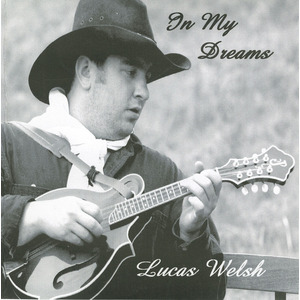
An important document from this period is Welsh’s independently released 2005 album In My Dreams. Recorded at Keyteck Studios with Wes Friesen and produced by Welsh and Friesen, the album demonstrates that Welsh had already developed well beyond the role of a competition fiddler. He performs all of the fiddle, guitar, mandolin and dobro parts himself and handles lead and harmony vocals, supported by Bruce Rawling, Trent Bruner, Melissa Welsh, Matthew Gruza, Dale Amyotte, David Barber and Friesen. The repertoire combines original compositions with old-time fiddle tunes, bluegrass, country and popular material. Welsh wrote ‘Gary’s Waltz’, ‘In My Dreams’, ‘Blue Notes’, ‘John Arcand Waltz’ and ‘Mad River Reel’, co-wrote ‘Casino Jig’ with Ben Beveridge and ‘When Your Gone’ with Melissa Welsh, and included a six-tune ‘Traditional Set’ drawing on repertoire that had long circulated through Canadian and North American fiddle traditions.
The album also provides an early glimpse of Welsh’s connection to the Saskatchewan bluegrass community. ‘Three Floors Up’ is credited to Junction 40, a three-man bluegrass group from Blaine Lake that had appeared at the John Arcand Fiddle Fest the previous year. The inclusion of the song places Welsh within the same small musical circle at a time when bluegrass, old-time fiddle and Métis music were becoming increasingly important parts of his musical life. Equally telling is his composition ‘John Arcand Waltz’, recorded years before Welsh’s later work as a teacher and performer within the Saskatchewan Métis fiddle community.
Welsh was also developing the sideman and studio career that would account for a substantial part of his musical work. He played acoustic rhythm guitar on Mike Burns’ 2003 album That Old Song, and in 2007 produced Saskatchewan fiddler JJ Guy’s Cadillac while contributing lead and rhythm guitars, third fiddle and dobro. He returned for Guy’s 2009 album Fiddler, playing lead and rhythm guitars, second fiddle and dobro. Over the years Welsh became equally comfortable occupying the centre of a performance or supporting somebody else, bringing fiddle, guitar, mandolin, dobro and vocal abilities to recordings and live performances throughout the province. He has since been credited with contributing to more than thirty recordings by artists from across Canada and has received Saskatchewan Country Music Awards nominations in fiddle, guitar and instrumentalist categories.
His abilities as an accompanist placed him alongside some of Canada’s most respected fiddlers. In 2012 Welsh accompanied Calvin Vollrath on acoustic guitar during a Yorkton performance, with Troy MacGillivray on piano. He has continued to appear as both fiddler and guitarist at Saskatchewan fiddle events and has represented the province within the wider Canadian fiddle community. His longtime association with pianist and accompanist Trent Bruner extended into Bruner’s instructional The Joys of Fiddle Music Volume 2, on which Welsh supplied guitar accompaniment.
The John Arcand Fiddle Fest became another important part of Welsh’s musical world. Over the years he appeared within its instructional and performance programming alongside musicians including John Arcand, Calvin Vollrath, Patti Kusturok, Daniel Gervais, Gordon Stobbe and others. The relationship was a natural one. Arcand had devoted much of his own career to preserving and teaching Métis fiddle traditions, while Welsh was gradually moving in the same direction. The ‘John Arcand Waltz’ recorded on In My Dreams in 2005 now stands as an early indication of a musical connection that would become increasingly significant as Welsh’s career developed.
Welsh’s Métis cultural work also brought him into continuing association with the Gabriel Dumont Institute, where he has appeared alongside artists including John Arcand, Donny Parenteau, Tristen Durocher, JJ Guy and other prominent Métis musicians. These performances increasingly reflected the direction Welsh’s career was taking. Playing remained important, but so did sharing the repertoire, teaching younger musicians and maintaining the community traditions through which fiddle music had historically been passed from one generation to the next.
By the 2020s Welsh was based in Meadow Lake, Saskatchewan, teaching fiddle in surrounding communities while continuing to perform, record and work on instruments. Luthiery and instrument repair became another extension of his musical life, allowing him to work not only with the music but with the instruments used to create it. He also became president of FiddlyNess Fiddle Camps, an organization devoted to Canadian fiddle music and culture through camps, dances, school programs and community events. For Welsh, teaching increasingly became less an additional occupation than a continuation of the musical tradition itself.
The path was considerably different from the one Welsh had imagined as a young classical violinist. The Royal Conservatory training never disappeared from his playing, but it became only one part of a much broader musical language. Classical technique was joined by bluegrass, country, western swing and jazz, while his rediscovery of his family’s Métis history gave traditional fiddle music a deeper personal significance. Welsh has described himself as an “honest player,” preferring to keep performances fresh rather than reproduce a tune exactly the same way from one night to the next. Everything he learned along the way — classical discipline, lead guitar, harmony singing, competition fiddling, studio work and traditional music — became part of the individual style he eventually developed.
Several decades into his career, Welsh increasingly came to see his role not simply as performing the music but helping ensure that it continued after him. Teaching young fiddlers, repairing instruments, accompanying other musicians and participating in Métis cultural events became central parts of that work. Looking back on his career in 2023, he described the process as having come full circle. “I have fun playing but trying to keep music alive and the traditional music alive is a big part of my focus right now.” For Welsh, a musical journey that began with ambitions of becoming an orchestral violinist ultimately led back to the music, culture and communities of Saskatchewan, and to helping another generation carry that tradition forward.
-Robert Williston
Tracks
14 tracks
In My Dreams (2005)
Showing 10 of 14 tracks
-
Lady be Good
-
Garys Waltz
-
Casino Jig
-
In My Dreams
-
Blue Notes
-
John Arcand Waltz
-
Traditional Set
-
To an Old Rose
-
Oscar Stones Rag
-
When Your Gone
Discography
Featured Titles
Albums
Gallery
Images
1 image
Lucas Welsh
Media
Videos
1 video