Artist / Band
Lewis Baloue
Biography
LOOKING FOR LEWIS
Randall Wulff, a.k.a. Lewis, made a fortune on Wall Street, partied with models and musicians, and recorded one of the most beguiling albums of the 1980s. Then he vanished.
The voice on the track is mournful. The lyrics are mumbled and hard to make out, but it’s easy to recognize the feeling. The name of the song, “I Thought the World of You,” says it all. This is the sound of a pain that cannot be reconciled. The singer is looking back on another life, deeply sad, piecing together how it all went wrong.
He called himself Lewis.
People clearly remembered the man who’d booked the Music Lab Studios in Los Angeles one afternoon in 1983, laid down 10 tracks over the course of a few days, and then vanished without a trace. They agreed on a few particulars: He was tall and good-looking, his thick blond hair parted neatly on the left. He had a beautiful girlfriend. He drove a white Mercedes-Benz convertible and wore suits to match. He claimed he was staying at the Beverly Wilshire hotel, after losing his house to a mudslide.
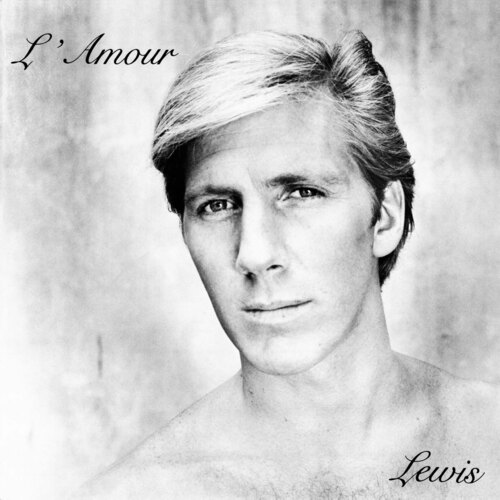
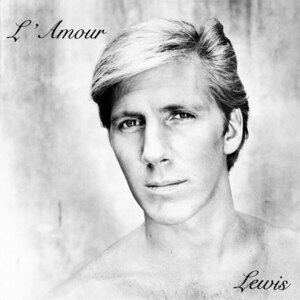
In between sessions, Lewis hired a photographer to shoot an album cover. A few days later, he sent the master recordings to a pressing plant and ordered an unknown number of copies, even arranging for a cover sticker proclaiming “This Album Contains the Hit Single ‘Romance for Two,’ Inspired by Christie Brinkley.” As in the supermodel Christie Brinkley. But the album never went anywhere. It’s unclear whether copies ever made it to record stores at all.
That was the last anyone saw of Lewis. Soon the check to photographer Edward Colver bounced. By the time he arrived at the Wilshire to track down the singer, Lewis had already checked out. There were forwarding addresses in Las Vegas and Hawaii, but they were both dead ends. Lewis was gone, and his debut album soon forgotten.
L’Amour is 10 songs of romance, heartbreak, and nostalgia, each sung at barely a whisper. The music consists of just a low piano, a plaintive synthesizer, distant and otherworldly, and a jaunty acoustic guitar—all of it rendered at a meandering pace that signals a man lost in the world. One detects faint echoes of Roxy Music in the keyboards, maybe some Nick Drake or Nina Simone in the vocals. But for the most part, L’Amour is thoroughly original. And it went utterly unknown for nearly 25 years after Lewis hopped in his white convertible and sped out of town.
Wulff, photographed by Ed Colver in 1983.
When record collector Jon Murphy discovered L’Amour in an Edmonton, Alberta, flea market in 2007, he wasn’t sure what he was picking up.
“It was a real hardscrabble flea market,” Murphy says. “The cover of the Lewis record looked great right away, and all the songs were original. And it had that funny sticker on the front, so I bought it.” He paid a dollar.
Murphy immediately realized he had come across something truly unique. He shared it with a group of private-press enthusiasts online, and they too were taken with the album’s weird mix of electronic music and acoustic warbling, which predated anything even remotely similar (think of James Blake, M. Ward, and Antony Hegarty) by more than a decade, at which point home recording became increasingly viable for unsigned musicians. Still more intriguing was the mystery surrounding the record. Who was Lewis? The question presented a beguiling challenge for the loose-knit subculture of music fans who dedicate themselves to tracking down forgotten artists. Jack Fleischer, a writer and filmmaker living in Los Angeles, was turned on to the album by a friend and blogged about it, writing that it was “soaked in some kind of weightless transcendence and spooky subterfuge, and it just totally destroys me.”
https://embed.spotify.com/?uri=spotify%3Atrack%3A56gbt3ie269tsY8tZRLfgS
For the past decade, Fleischer had been collecting and selling rare records, rediscovering lost artists along the way. “I freaked when I heard the album,” Fleischer says. “It was the best thing I’d heard all year.” He posted the tracks on his blog, hoping to shake loose some leads or maybe persuade Lewis to step forward. But nobody seemed to have the slightest idea where the record had come from.
Fleischer was eventually contacted by Matt Sullivan, owner of the record label Light in the Attic, who was interested in reissuing L’Amour. There was one big obstacle, of course: They needed Lewis’ permission. So in the fall of 2012, Sullivan and Fleischer set out to find the artist. Their first clue was a name on the back of the album — Colver, the photographer who shot the jacket portrait.
He was happy to help. “We asked him if he had any contact info for Lewis,” Fleischer recalls, “and sure enough, he finds the folder with the negatives. And the name was Randall Wulff. And now we had 30 photos of this guy, when for years we only had one!”
Even so, locating Wulff proved difficult. “Within a few months, we were right back where we started,” Fleischer says. And then it struck them: If the album was found in Edmonton, maybe Lewis was Canadian. They sent e-mails to every Wulff in Canada. Jeremy Wulff, a chemistry professor at the University of Victoria, wrote back. Randy Wulff was his uncle.
“My memories of Randy are confined to small snippets around Christmas or summer vacations, when we would go back to visit Calgary,” he wrote in the e-mail. “I know that he was involved in a lot of different things in the early ’80s…I mostly remember stories of him doing big deals in the stock market…[He] always had a nice car and a beautiful girl on his arm…I remember all-white leather furniture.”
From conversations with Jeremy, and by contacting other family members (many of whom declined to get involved), Fleischer and Sullivan were able to piece together a rough biography of Wulff. He was born in Calgary in 1954, the youngest of four siblings in a middle-class family. His father was a police officer, and his mother worked in a retail store. By the mid-’70s, Calgary was being transformed from a rodeo town into an oil-rich metropolis. Randy and his older brother, Larry, got into the stock market, working with investors in the rapidly growing city and splitting their time between Calgary and New York. Even with those details, however, Fleischer and Sullivan were still no closer to finding Lewis himself.
Eventually, Light in the Attic moved forward with the reissue anyway. Sullivan thought the music needed to be heard. When L’Amour came out last summer, Pitchfork called it the best reissue of the year, praising its “gently dissolving melodies and gossamer synths.” Vice’s Noisey blog said it “just might be the best album of 2014—despite being 31 years late.”
The lost album had finally found an audience—and there was even a new twist. A few weeks before the release of L’Amour, a record aficionado and friend of Sullivan’s was sorting through his collection when he came across an LP he’d bought in a lot a few years before and forgotten about. It was called Romantic Times. And it was by Lewis.
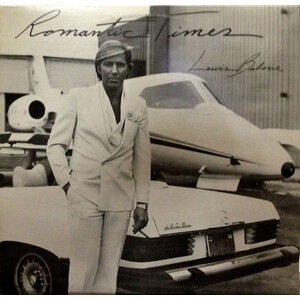
The cover to “Romantic Times,” recorded by Wulff in 1985 under the name Lewis Baloue.
“I couldn’t believe there was a second record—right before we released the first one, and oh, man, there was a second!” Sullivan says. “And it’s just an incredible album.” Recorded in Calgary in 1985, Romantic Times features a striking cover showing Randall in front of a private jet.
A few months later, a new break brought them a step closer to the artist himself. After they did some press for L’Amour in Calgary, they heard from a source named Heath Ellingham, who knew Lewis personally. “He told us he had just seen Randy last year, and if we came up to Canada to meet with him, he’d find him for us,” Fleischer says.
He and Sullivan immediately booked a flight to western Canada.
Ellingham grew up with the Wulff brothers in Calgary and became a real estate developer. At one point, he hired Larry, who then did construction work, to help remodel one of his homes. In 1981, the price of oil started dropping precipitously, and with it, the city’s fortunes. Ellingham found himself looking for new business opportunities, and on Larry’s advice, he reached out to Randy, who was making good money on Wall Street. Ellingham eventually assembled a group of wealthy acquaintances, and together they enlisted Randy to invest on their behalf. The mineral stocks they bought rose swiftly in value, but Ellingham says he never saw a dime in profit from Wulff, who was living in a suite at the Plaza hotel.
We were unable to independently confirm Ellingham’s tale of financial chicanery. But in the late ’70s to early ’80s, Randy did live large in New York City. He was a regular on the nightclub scene, and often traveled in limousines and stayed at the Plaza, one of the city’s most sumptuous hotels. He also traveled far and wide during this time, from Hawaii to Venice, always making music. And he may or may not have dated Christie Brinkley, who last year tweeted a link to a Guardian review of L’Amour, adding, “This album is transporting…but while I recall some things, my memory is as blurry as the hazy songs.” According to a publicist for the supermodel, Brinkley cannot recall whether she dated or even met Randy, but believes it’s possible.
The way Ellingham saw it, Lewis was living the life of a rock star even when he was working as an investor. “In his mind, he was always music first,” he says. “All that finance stuff, that was just to pay for his first album. I mean, he was this star in New York. He had this James Bond thing going on. Everybody thought he was really onto something, so who was going to say that the music wasn’t going to work out?”
Ellingham recalls meeting with various investment firms with Randy, who always promised the money was safe and the earnings on their way.
Before he made good on his promise, Ellingham says, Randy abruptly left for Los Angeles, where he checked in to the Beverly Wilshire with his brother and girlfriend Karen. It was during this time that he recorded L’Amour at Music Lab Studios. Colver, who had photographed almost every major artist in the L.A. punk scene, was hired to shoot the album cover, which featured a shirtless Wulff against a concrete wall in Los Angeles. In one shot, Wulff is seen with Karen, both looking carefree, with Randy betraying none of the melancholy that he had captured on the album — or any of the anxiety he might have felt over his business dealings.
Wulff at Fiasco Bros. recording studios in British Columbia, around the year 2000.
Colver was owed $250, he says, and it clearly still rankles him. “I hate to badmouth this guy, but this young kid totally screwed me,” says the photographer, who has yet to listen to the album. “I drove at least 400 miles—I did the whole photo shoot, I printed the photos and took them back to him for approval. I laid out the whole design of the album, and he just stiffed me on it. He’s driving a convertible Mercedes and staying at the Beverly Wilshire, and he just stiffed me.”
After leaving L.A., Wulff avoided the limelight, whether hoping to escape his debts or simply to make a new start. But, as demonstrated by Romantic Times, he never stopped making music. Continuing their research, Fleischer and Sullivan came across a studio in Vancouver where someone who looked and sounded a lot like an older Randall Wulff had recorded. He called himself Randy Duke.
A year ago, Heath Ellingham came out of a restaurant in Vancouver and noticed someone kneeling down to look at his motorcycle. When the man stood up, he recognized him immediately. Randall Wulff.
“He said he was living in the area; the whole interaction was very short,” Ellingham says. “He has a cane now.”
Ellingham didn’t know Wulff’s address, but he knew Randy enjoyed drinking coffee at out-door cafés, and so for two days in August of last year, Sullivan and Fleischer canvassed the city, looking for a man who resembled the pictures on the records, but older. They even put up fliers.
“By the end of the second day, we got pretty discouraged,” Fleischer recalls. “We thought we had done all we could. So we went to the beach, and all of a sudden, we come to the stoplight, and Matt sees this striking guy. Huge. Six foot four. In the afternoon sun. Wearing all white. Has the cane. Brand-new tennis shoes, no socks. And it was him. It was Lewis.”
They approached and introduced themselves. The three men sat down at the café, and for the next hour they talked about his life, his music, and the warm reception it had found. Lewis, they said, didn’t seem to care.
“I had in my pocket a check for $20,000 in royalties, and I tried to give it to him,” Sullivan says. “But he turned it down. He signed a few copies of the album, but he wouldn’t take the money.” There was something very Lewis-like in the way he declined the check. “He said he had ‘no interest in coin,’ ” Sullivan recalls with a laugh. And that was it.
The next day, Sullivan wrote a blog entry informing the world that they had found Lewis, and that because he had been unwilling to sign a release allowing Light in the Attic to continue pressing the album, the label would therefore be forced to withdraw it.
But Wulff had left too much of a trail of haunting and beautiful recordings to achieve his perfect anonymity. A few months after he was found, a studio in Vancouver where “Randy Duke” had recorded in the early 2000s began releasing the tracks. They sounded nothing like his earlier work. They were ornate. They were overproduced. They were cheesy. Lewis’ fan base, which had nurtured its obsession on a variety of message boards, became disenchanted. How had Lewis gone from making such ethereal compositions to putting out such dreck?
In April, Maxim visited the rundown studio, Fiasco Bros., in New Westminster, British Columbia, and asked the owner to play some of Randy’s tracks for us. There were more than 10 albums’ worth of songs, and they were just as striking and raw as his earlier work. The owner, Len Osanic,
explained that the added production had been his idea. He’d hired a band and recorded new backing tracks for Randy’s songs, keeping only his voice and releasing the resulting tracks under Randy’s name. He had hoped Randy would come back to the studio to work on more music. He just didn’t know where to find him.
Randall Wulff in April of this year.
On a sunny afternoon in late April, Randall Wulff submits to his first-ever media interview. We sit at an outdoor table at a coffee shop in Vancouver. He is a regular there, and his usual order—a large coffee of a particular roast, with two cups and a single sleeve—is well known to the teenage baristas behind the counter. “Oh, Randy,” one says when shown a picture of him. “We definitely know Randy.”
On this afternoon, Wulff is dressed in a gray hooded sweatshirt and brand-new Adidas sneakers. He drinks his coffee black. He is relaxed, friendly, and outgoing, more curious about our own stories than in telling his. But in the golden afternoon light, he begins tentatively to speak about his life. Brushing aside most direct questions, he opts instead to wend his way through a series of colorful if hard-to-confirm anec-dotes. He touches on the 1989 California earthquake (“I was driving across the Golden Gate Bridge when I just saw all this dust start flying off it”) and the time he had tea with the film director Sir David Lean (“He was considering a girlfriend of mine for a part”). He mentions living with the heiress Doris Duke (“What a fine lady”), and longingly recalls making music through the night at the Chelsea Hotel. “We would just play and play,” he says. “Everybody who was anybody was there.” He even gave fashion tips to George Harrison about how to wear cowboy boots.
https://embed.spotify.com/?uri=spotify%3Atrack%3A1M5PIOX8eEaKqDL9hbB3Jd
When we ask him about L’Amour, he waves away our questions. “Oh, that was a long time ago, a long time,” he says. We ask him about growing up in Canada, and he remembers how he used to play hockey dressed all in white, even taping up his skates with white tape, a style that his teammates found unsettling. “They all wouldn’t go near me; they thought I was so strange,” he says. The white scarf he sported in those days bore his great-grandmother’s last name: Lewis.
Wulff declines to talk about his days on Wall Street. But he did offer some details about his sudden departure from Los Angeles.
“I went up to Calgary to take care of my father,” he says. “Very sad to leave that city.” According to his nephew, Wulff’s father had become wheelchair-bound after crashing his motorcycle in the mid-’80s. “I had to take care of my father, and I tried to bring girlfriends with me. But it was tough. There’s nothing to do in Calgary! Nothing like New York.”
As for his life now, Lewis says he lives with his girlfriend and his cat. “I play music all night,” he says. “That’s what I care about.” We ask whether he plans on releasing any new material. Maybe in a few months, he says. He’ll let us know. His gaze lingers for a moment on a beautiful woman who’s walking by, and he tells us how one time, the experience of being in New York, that amazing city, brought him to tears. He doubts he could ever go back there.
Finishing his coffee, he stands and offers a warm goodbye.
“Say hello to New York for me,” he says. “Blow that city a kiss. I love that place so, so much.”
With that, Randall Wulff, Randy Duke, Lewis, walks back up the hill, holding the cane by his side. He doesn’t need it. At the top of the street, he looks back—maybe to see if he’s being followed, maybe just a last goodbye. A second later, he’s gone again.
-Max Rivlin-Nadler, Jun 30, 2015
Tracks
18 tracks

L'amour (1983)
10 tracks
-
I Thought The World Of You
-
Cool Night In Paris
-
My Whole Life
-
Even Rainbows Turn Blue
-
Like To See You Again
-
Things Just Happen That Way
-
Summer's Moon
-
Let's Fall in Love Tonight
-
Love Showered Me
-
Romance For Two
Romantic Times (1985)
8 tracks
-
We Danced All Night
-
Bon Voyage
-
Don't Stop It Now
-
It's a New Day
-
So Be in Love With Me
-
Bringing You a Rose
-
Where Did My Love Go Away
-
As the Boats Go By
Discography
Featured Titles
Albums
Gallery
Images
1 image
Baloue, Lewis
Media
Videos
0 videos
No videos available for this artist.