Artist / Band
Safia Nolin

Biography
Safia Nolin sees herself as a political being through her battles, the topics she tackles and her appearance. As she, a racialized and openly lesbian woman, is perceived as deformed because she doesn’t fit the feminine patterns we’ve been taught for centuries, she’d rather embrace that dissonant image rather than matching damaging ideals by being someone she’s not. This is how Seum is an accomplished piece of work that fully defines its author. Safia Nolin is an artist and a person shedding her skin and celebrating this transition doing what she does best, by honoring all sorts of pain.
While she’s tuning her guitar during an interlude onstage, Safia Nolin tells the audience about her day with a lot of humor before introducing the next song as even more depressing than the previous one. As her first two albums (Limoilou, 2015 and Dans le noir, 2018) predicted it, the Seum EP that Safia Nolin released in 2021 was never going to be an optimistic piece of work. However, just like any other painful musical creation, Seum is a record that thrives on mourning a few things from the past and taming one’s demons. Although Safia remembers conceiving all 8 tracks from the EP with a deep feeling of injustice, she now finds herself soothed, playing it live in Quebec as well as in France.
Safia herself set herself up as the art director of her latest single, the ballad “Carrie” that she sings in English. She not only is a singer songwriter, she now chooses to go completely DIY by crafting the imagery accompanying her music.
Moreover, lately she’s gone entirely independent as an artist, freeing herself from any label company. Better off without anyone but herself on that new path she’s building on her own, she recorded most of the 4 tracks from Seum outside, each of them in a melancholic version called sunrise and in a happier version, sunset.
Her recent passion for crochet now adds to the softness of her voice and the roughness of her feelings. Crochet goes beyond a simple pastime as it allows Safia to express once more her duality, shunt from her cheerful and kind personality to a genuine sorrow she exorcizes through music. The pieces of clothing (hats, sweaters, gaiters, etc.) that she crafts display explosive and eccentric colors that contrast with long threads she intentionally lets hang from the rest, showing her attachment to her ideal of deformity.
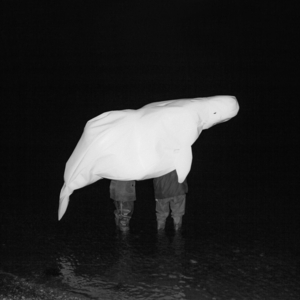
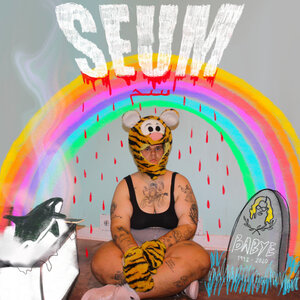
To dream of one’s death can be scary at first, but it so happens that it means saying goodbye to a piece of oneself, as if one’s mind simply realized it was making a fresh start all along. Safia Nolin’s songs may be dark on every level, yet still it is by burying a former part of herself as shown on her latest EP’s cover that she delivers an authentic record with her own particular kind of pop music. Deliberately thundering and dirty, her guitar goes perfectly with Safia’s clear, calming voice. Agathe Dupere (bass), Marc-André Labelle (guitar) and Jean-Philippe Levac (drums) accompany the artist laying out what she finds herself in the most: the raw imperfection of the moment. It is no surprise that, as a horror movie enthusiast, she claims that The Blair Witch Project (1999) is her personal favorite. Daniel Myrick and Eduardo Sánchez’s film is a perfect example of an accomplished yet minimalist work. It is one of the numerous references that bring Safia Nolin’s art to life, which arouses feelings we tend to avoid at all costs – those negative feelings, that she so well keeps forming through rough tones and lyrics.
Through her more recent projects, notably Surveillée et Punie (Watched and Punished), UFO Religion, and Reprises Vol. 3, Safia Nolin pushes this artistic and political approach even further. These works extend her rejection of norms by exploring even more intimate territories, where vulnerability becomes a space of resistance. UFO Religion, in particular, stands as a kind of poetic manifesto on alienation and the feeling of estrangement from the world, while Surveillée et Punie evokes the constant pressure of the social gaze and the mechanisms of control imposed on marginalized bodies. As for Reprises Vol. 3, it acts as an emotional laboratory, where reworking becomes an act of reappropriation, transforming existing works into mirrors of her own melancholy. Together, these projects bear witness to an artist who continually delves into her identity, refusing any form of softening, and who makes each creation an act of raw truth.
Awards & Recognition
Nominated at the 2020 Canadian Folk Music Awards for French Songwriter of the Year
Nominated at the 2019 ADISQ Gala for Folk Album of the Year
Félix Awards for Female Artist of the Year and Album of the Year - Reinterpretation (Reprises Vol.1) and Nominated for Video of the Year (Technicolor) at the 2017 ADISQ Gala
Winner of the 2016 SOCAN Breakthrough Award
Winner of the 2016 Prix Félix-Leclerc de la chanson
Félix Awards for Breakthrough Artist of the Year and Video of the Year (Noël partout), 2016
GAMIQ Awards for Songwriter of the Year and Folk Album of the Year, 2016
Nominated at the 2016 GAMIQ for Artist of the Year and Video of the Year (Noël partout)
Tracks
60 tracks

La Laideur/ Igloo (2013)
2 tracks
-
La Laideur
-
Igloo
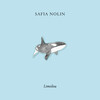
Limoilou (2015)
Showing 10 of 13 tracks
-
Les excuses
-
La laideur
-
Technicolor
-
Aujourd’hui, demain
-
Ce matin
-
Les Marées
-
Igloo
-
Valser à l’envers
-
Valser à l'envers B
-
Si seulement

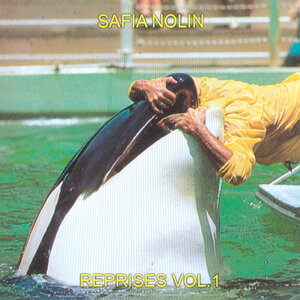
Reprises Vol 1 (2016)
8 tracks
-
Calvaire
-
D'amour ou d'amitié
-
Laisser l'été avoir 15 ans
-
Loadé comme un gun
-
Entre l'ombre et la lumière (avec Marie Carmen)
-
Ayoye
-
C'est zéro
-
Le sentier de neige

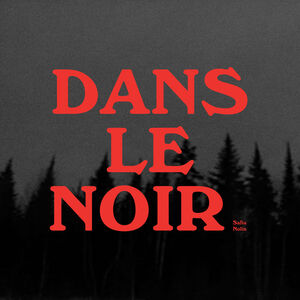
Dans le noir (2018)
Showing 10 of 13 tracks
-
La neige
-
1998
-
Miroir
-
Belvedere
-
Sans titre
-
Les chemins
-
Bye
-
Dagues
-
Encore
-
Je ne comprends pas

Reprises Vol 2 (2019)
8 tracks
-
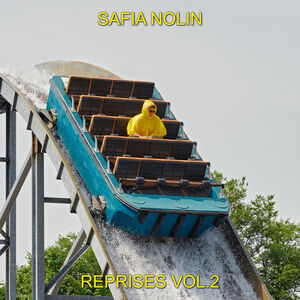
Et Cetera
-
Tous Les Cris Les S.O.S. (Feat. Alexandra Stréliski)
-
Destin
-
Je Serai (Ta Meilleure Amie) (Feat. Pomme)
-
Tu Ne Sauras Jamais
-
Je T’oublierai, Je T'oublierai
-
Un Ange Qui Passe
-
J'ai Demandé À La Lune
UFO Religion (2024)
8 tracks
-
la fin du monde
-
shrooms
-
pizzaghetti
-
djurdjura (جبال جرجرة)
-
août
-
nos mauvaises langues
-
et si, de
-
claps

Reprises Vol 3 (2026)
8 tracks
-
Seul
-
Loin d'ici
-
Si exceptionnel
-
Tu t'en vas
-
Qui prendra ma place
-
Sous le vent (feat. Pomme)
-
Gabriel
-
Tu trouveras
Discography
Featured Titles

Albums
Singles
Gallery
Images
6 images

Safia Nolin
Safia Nolin
Safia Nolin_c-marie-ouardiya-atcheba

Safia Nolin-c-marie-ouardiya-atcheba-1727878637
Safia Nolin_c-marie-ouardiya-atcheba-1727878740

Nolin, Safia
Media
Videos
4 videos