Artist / Band
Payola$
Biography
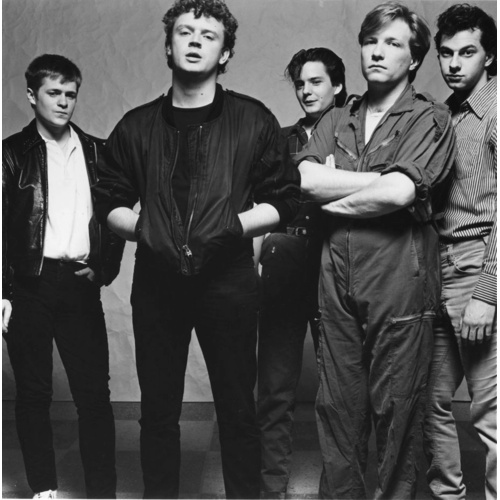
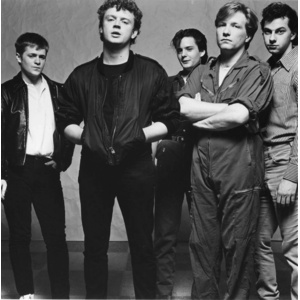
Emerging from Vancouver’s restless late-70s scene, Payolas fused punk attitude, new-wave urgency, reggae undercurrents, and sharp pop instincts into one of the most distinctive sounds to come out of the West Coast. The core of the band formed when guitarist–songwriter Paul Hyde, an English immigrant steeped in the era’s art-school sensibilities, connected with bassist-keyboardist Bob Rock, whose engineering ambitions were just beginning to take shape in Vancouver studios. Their early collaboration grew out of an unlikely chemistry: Hyde’s outsider lyricism and sly theatricality meshing with Rock’s grounding in riff-driven rock, recording craft, and a tight, disciplined musical sensibility.
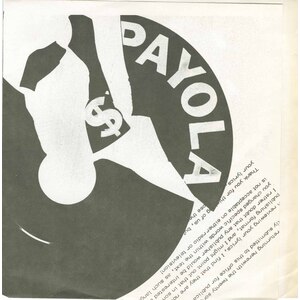
Vancouver at the turn of the decade was a fertile mix of DIY punk clubs, reggae-leaning bar bands, and experimental art collectives. Payolas moved within all of it. Their earliest independent singles signaled a group willing to cross boundaries that most local acts kept separate. “China Boys,” released in 1979 on Slophouse Records, became a regional jolt — part new wave, part reggae, openly political, musically sharp without sanding away any urgency. That single aligned them with the city’s emerging punk-adjacent wave but also made it clear they weren’t easily categorized. Their shows at the Smiling Buddha Cabaret, Body Shop, and other small Vancouver venues set them apart as a band capable of drawing in both the punk crowd and the more adventurous college-radio listeners.
Interest from major labels arrived quickly. A&M picked them up in 1980 and issued the Introducing Payolas EP, followed by the full-length In a Place Like This in 1981, a record that carried their cross-genre approach into a larger production framework. Even at this early stage, Rock’s instincts in the studio were becoming central to the band’s identity. His role as both performer and increasingly confident producer/engineer gave Payolas records a muscular clarity that stood out from the album-oriented rock dominating Canadian radio. Hyde’s voice — theatrical, sly, often emotionally cutting — played against that precision, creating a tension that became the band’s hallmark.
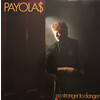
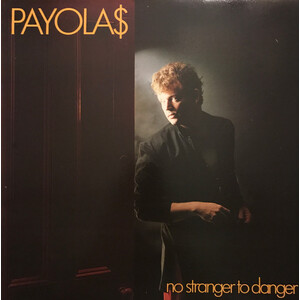
Their breakthrough came with 1982’s No Stranger to Danger, produced by Mick Ronson. The album’s lead single “Eyes of a Stranger” became one of the defining Canadian hits of the decade, earning JUNO Awards for Single of the Year and Best New Group. Ronson’s involvement broadened their sound without flattening their edges; the production found a balance between moody synth textures, biting guitar, and a rhythm section that retained the looseness of their early club work. The album placed Payolas alongside Canada’s top alternative-leaning acts while preserving their underlying grit.
Commercial attention brought creative pressures. By the mid-80s, the band rechristened itself Paul Hyde and the Payolas, a label-driven shift intended to present a clearer pop identity. The name change coincided with a more polished direction on 1985’s Here’s the World for Ya, produced by David Foster. The resulting sound — slick, radio-ready, and markedly different from the tension-filled new-wave foundation of earlier releases — yielded moderate chart success but divided their fanbase. Hyde and Rock, both adaptable but rooted in more adventurous impulses, carried the burden of reconciling commercial expectations with the band’s original spirit.
By 1986 the Payolas effectively dissolved, though the partnership between Hyde and Rock endured. The pair resurfaced briefly as Rock and Hyde, releasing the album Under the Volcano in 1987, which produced the Canadian hit “Dirty Water.” The project leaned into a more mature, melodic approach and became a bridge between Rock’s future as one of the world’s leading rock producers and Hyde’s continued path as a thoughtful singer-songwriter.
Bob Rock went on to help define late-20th-century hard rock and metal production, shaping landmark albums for Metallica, Mötley Crüe, The Cult, Kingdom Come, and countless others. His ascent brought renewed attention to Payolas, whose catalogue began to be reassessed as a crucial link in Vancouver’s musical evolution — a band that fused global influences long before it became common in Canadian alternative rock. Hyde continued releasing solo albums marked by sharp social observation and a melodic signature unmistakably rooted in his earliest Payolas work.
Reunions in the early 2000s brought the classic lineup back into focus, including drummer Chris Taylor and multi-instrumentalist Alexander “Alec” McEliece, with new recordings hinting at the band’s still-present ability to merge angular pop with moody atmospherics. Although these later projects arrived quietly, they underscored what had always made Payolas distinct. The band’s legacy is less about commercial peaks than about their place within a moment when Vancouver music was transforming and they, more than most, breathed that experimental atmosphere into nationally recognized work.
Their catalogue remains one of the most striking examples of how Canadian new wave could be daring, political, playful, and fiercely crafted all at once.
-Robert Williston
Tracks
13 tracks
China Boys (1979)
2 tracks
-
China Boys
-
Make Some Noise
No Stranger to Danger (1982)
Showing 10 of 11 tracks
-
Romance
-
Eyes of a Stranger
-
Same Old Song
-
Rose
-
Hastings Street
-
Youth
-
Lights to Change
-
Pennies Into Gold
-
Mystery to Me
-
Rockers
Discography
Featured Titles
Albums
Singles
Gallery
Images
1 image
Payola$
Media
Videos
0 videos
No videos available for this artist.