Artist / Band
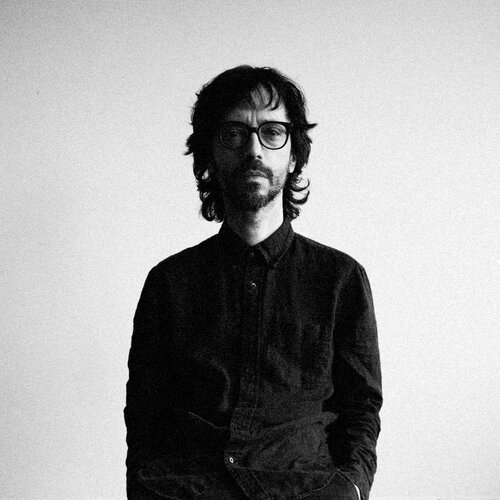
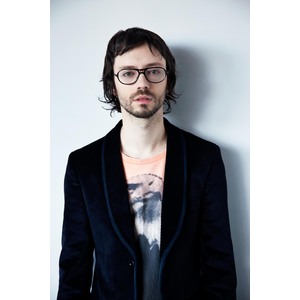
Philippe B (Philippe Bergeron)
Biography
Philippe B, born Philippe Bergeron in Rouyn-Noranda, Quebec, has built one of the most distinctive and quietly influential bodies of work in contemporary Québécois song. A singer-songwriter, multi-instrumentalist, arranger, producer, and occasional composer for film and theatre, he emerged in the mid-2000s with a voice that felt immediately singular: intimate but literate, restrained yet emotionally precise, rooted in folk music but unafraid of chamber-pop detail, electronic textures, and cinematic scale. Over the course of two decades, he has become one of Quebec’s most respected auteurs, equally admired for his own records and for the subtle intelligence he brings to projects by other artists.
Before establishing himself as a solo artist, Bergeron was active in Montreal’s independent music community and performed as the lead singer of Gwenwed. He also became known as a guitarist and trusted collaborator in the orbit of other major francophone artists, most notably working with Pierre Lapointe, for whom he played guitar and later contributed songwriting. That role helped introduce him to a wider audience, but Philippe B’s own material was already revealing a writer with a highly individual sensibility—one drawn to atmosphere, literary suggestion, and songs that seem to hover between memory and invention.
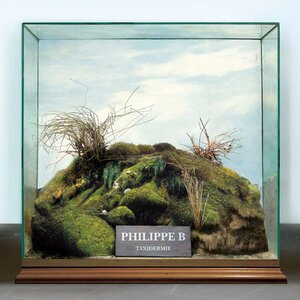
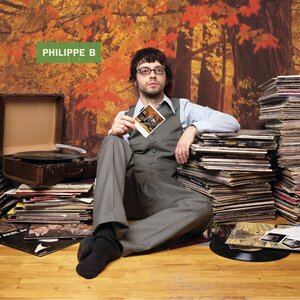
His self-titled debut album, Philippe B (2005), announced that sensibility in spare, folk-minimalist form. Released during a period when Quebec chanson was again embracing more adventurous textures, the album positioned him as a songwriter more interested in mood and implication than obvious hooks. His follow-up, Taxidermie (2008), broadened that palette, deepening his reputation among critics as a writer capable of balancing earthy detail with dreamlike imagery. Around this same period he remained active as a sideman and collaborator, appearing regularly on Quebec stages and building a reputation as a musician whose arrangements could be as compelling as his melodies.
By the end of the 2000s, Philippe B had become a sought-after behind-the-scenes creative force. In 2009 he co-wrote songs with Pierre Lapointe for Sentiments humains and also contributed material to Stéphanie Lapointe. He moved fluidly between disciplines, creating music for stage works such as Silence Radio and participating in multidisciplinary performance projects including Phéromones with actor Sophie Cadieux. This broader artistic life—songwriting, theatrical composition, literary text, photography, staging—would become central to understanding his later albums, which increasingly function like self-contained worlds rather than conventional singer-songwriter releases.
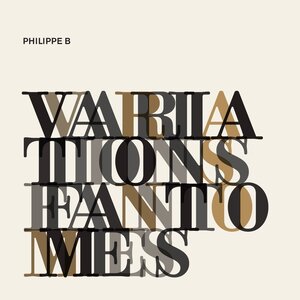
His third album, Variations fantômes (2011), marked a decisive artistic leap. More expansive in conception and more ambitious in arrangement, it confirmed that Philippe B was not simply another introspective folk singer but an arranger-composer with a rare ear for structure and tone. Drawing inspiration from classical music and spectral ideas of memory and influence, the album pushed his work toward something more orchestrated and formally adventurous. It also helped establish a recurring trait in his catalogue: each record feels less like a sequel than a new literary or cinematic chapter.
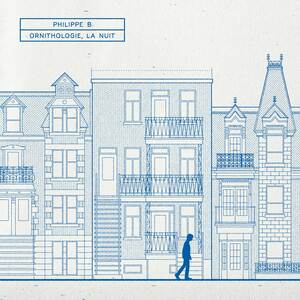
That evolution reached a breakthrough with Ornithologie, la nuit (2014), the album that brought Philippe B to a broader national audience. The record was widely praised, landed on the Polaris Music Prize long list, and earned him the Félix Award for Songwriter of the Year at the Gala de l’ADISQ. It was also nominated in ADISQ’s Folk Album category and helped cement his status as one of the leading voices in modern Quebec songwriting. By this point, critics and peers alike increasingly viewed him not only as a strong lyricist but as a true album artist—someone who could sustain an atmosphere across an entire record with uncommon discipline.
Philippe B’s work has always extended beyond his own discography. He has been deeply involved as an arranger, producer, and musical architect for other artists, with his name turning up behind projects by performers such as Salomé Leclerc and in the broader Bonsound ecosystem. His ability to build immersive sonic environments—never flashy for its own sake, always in service of the emotional core of a song—made him one of the more quietly essential figures in Quebec’s independent music scene during the 2010s. Even when he wasn’t in the spotlight, his fingerprints were often there.
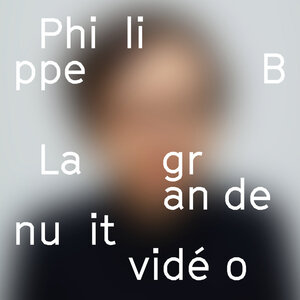
His fifth album, La grande nuit vidéo (2017), further expanded his narrative and cinematic instincts. Released via Bonsound, the record explored the blurred border between fiction and reality, pairing his elegant songwriting with a heightened sense of character, image, and dramatic framing. It earned nominations at ADISQ for Folk Album of the Year and Critics’ Choice Album of the Year, was long-listed for the Polaris Music Prize, and brought a nomination at the Canadian Folk Music Awards for French Songwriter of the Year. It also reinforced his reputation as a creator whose records are built as conceptual environments as much as collections of songs.
In 2019, Philippe B extended his cinematic interests directly into film, composing the music for Éric Morin’s feature Nous sommes Gold (We Are Gold). The project was a natural fit: a fictional band story shaped by someone whose own songwriting already carried a strong sense of scene, mood, and character psychology. His score and related songs earned him a Prix Iris nomination for Best Original Music at the Quebec Cinema Awards, further underlining how comfortably his work could move between album craft and screen composition.
After a six-year gap between solo albums, Philippe B returned in 2023 with Nouvelle administration, a record shaped by adulthood, domestic change, and the emotional recalibration that comes with fatherhood. Where earlier albums often approached autobiography through masks, invented figures, or oblique narrative framing, this sixth album brought his writing closer to lived experience. Bonsound described it as an album inspired by his new role as a father and by changing cycles of life, and that shift can be felt throughout the material: the pronouns “you” and “we” suddenly carry familial, intimate, and generational weight. The result was one of his warmest and most emotionally direct records, without sacrificing the poetic ambiguity that defines his best work. The album also earned him renewed ADISQ recognition, including a Félix for Sound Recording and Mixing of the Year for the title track.
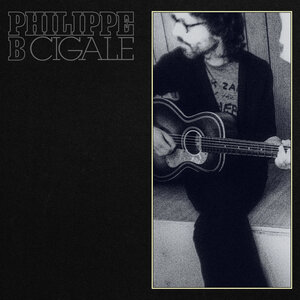
In 2026, Philippe B released Cigale, his seventh album and, by many accounts, his most overtly autobiographical work to date. Issued on March 13, 2026, the album looks back on youth, precarity, artistic ambition, and the uneasy romance of choosing art as a life path. Bonsound framed it as the portrait of a man reflecting on what it means to make a living from passion despite insecurity, while early coverage emphasized how directly the songs revisit the uncertainties and disillusionments of his twenties. Tracks such as “La jeunesse est un autre pays” and “1999” suggest a writer no longer merely fictionalizing memory, but confronting it with unusual clarity and compassion. If Nouvelle administration brought Philippe B into the emotional realities of parenthood, Cigale appears to widen the frame—placing that maturity in conversation with the idealism, confusion, and self-mythology of the young artist he once was.
Across his catalogue, Philippe B has remained difficult to reduce to a single tradition. He belongs to the lineage of Quebec chanson, certainly, but his records are just as indebted to chamber pop, literary songwriting, art-folk, film, and collage-like studio construction. His arrangements often feel handmade yet meticulously sculpted; his lyrics can move from plainspoken intimacy to elliptical poetry without warning. For many listeners, that combination is precisely what makes his work endure: he writes songs that feel both deeply personal and faintly theatrical, as if memory itself were being staged under careful lighting.
For MoCM purposes, Philippe B stands as one of the clearest examples of how 21st-century Canadian francophone songwriting continued to evolve beyond traditional folk and chanson categories. He is not merely a singer-songwriter in the conventional sense, but a complete world-builder—an artist whose albums reward close reading, repeated listening, and attention to the craft behind every detail.
-Robert Williston
Tracks
84 tracks

ST (EP) (2005)
Showing 10 of 11 tracks
-
La comète
-
Archipels
-
Philadelphie
-
Atlantique
-
Les prisonniers du Lac Dufault
-
Le déluge
-
Tant que la neige
-
Mécontenté
-
Canyon
-
La ballade de Calamité et Phil de fer
Taxiderme (2008)
10 tracks
-
L'Harmonie des sphères
-
Rose de cactus
-
Je n'irai pas à Bilbao
-
La passion de St-Joseph
-
Chelsea mon amour
-
Baptêmes
-
La dérive des continents
-
Laurence d'Abitibi
-
La ville est là
-
Taxidermie

Variations fantômes (2011)
Showing 10 of 14 tracks
-
Hypnagogie
-
L'été
-
La ballerine
-
Petite leçon de ténèbres
-
Mort et transfiguration (d'un chanteur semi-populaire)
-
Nocturne #632
-
Le tombeau de Nick Drake
-
Reprise
-
Ma photographe
-
Chanson pathétique

Ornithologie, la nuit (2014)
Showing 10 of 14 tracks
-
La complainte du scaphandrier
-
Ornithologie
-
Biscuit chinois
-
Calorifère
-
Le sommeil des oiseaux
-
Cheveux courts, cheveux longs
-
Alice
-
Nous irons jusqu'au soleil
-
L'année du serpent
-
Ornithologie II
La Grande Nuit Vidéo (2017)
Showing 10 of 14 tracks
-
Explosion
-
Sortie/Exit
-
Autoportrait (sans lunettes)
-
Debra Winger
-
La saison de tous les dangers
-
Rouge-gorge
-
Je t’aime, je t’aime
-
Interurbain
-
Le monstre du lac Témiscamingue
-
Ellipse
Nouvelle Administration (2023)
10 tracks
-
Je t'attends
-
Pauline à la ferme
-
Marianne s'ennuie
-
Nos maisons
-
Les filles
-
Les orages là-bas
-
Souterrain
-
Nouvelle administration
-
Last Call
-
L'ère du Verseau
Cigale (2026)
Showing 10 of 11 tracks
-
Ulysse
-
La Cadbury
-
La jeunesse est un autre pays
-
Ovni
-
La chanson de l'été
-
1999
-
Boule miroir
-
La ballade de Johnny Crève-cœur
-
Avant/Après
-
Hôtel Tadoussac
Discography
Featured Titles

Albums
Gallery
Images
3 images
Philippe B (Philippe Bergeron)
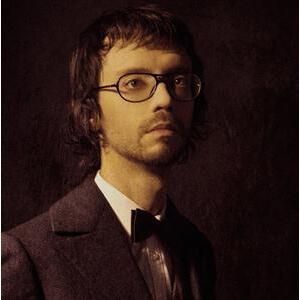
Philippe B (Philippe Bergeron)
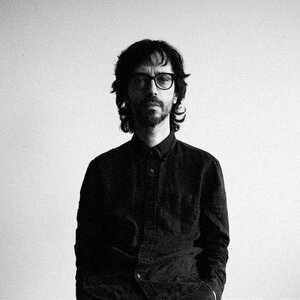
Philippe B (Philippe Bergeron)
Media
Videos
0 videos
No videos available for this artist.