
Artist / Band
Marie-Pierre Arthur
Biography
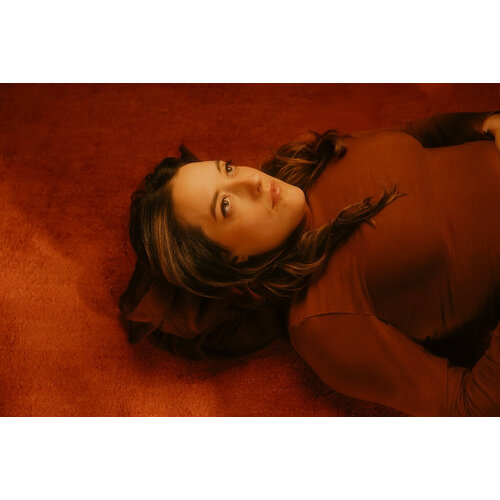
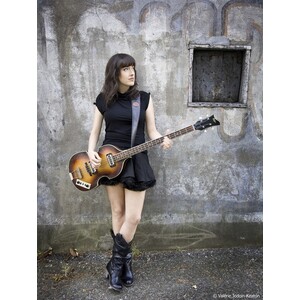
Before releasing music under her own name, Marie-Pierre Arthur had already built a reputation as one of Québec’s most versatile and quietly powerful musicians. As a bassist and backing vocalist for Mara Tremblay, Karkwa, Ariane Moffatt, Stefie Shock, and Édith Butler, she stood out for her warm, rounded Höfner tone, her easy musicality, and a presence that felt both grounded and gently off-centre. Even in supporting roles, it was clear she had her own world waiting to break through.
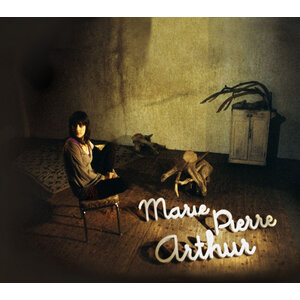
That moment arrived in 2009. After years of gathering fragments of songs and fighting the feeling that she was meant to make her own record, Arthur finally gave in to what she describes as an “obsession.” With no clear map and no guarantee of where it would lead, she stepped forward anyway. The result was her self-titled debut: an intimate collection of folk-pop songs shaped by her instinctive sense of melody, her unmistakable voice, and the collaborative energy of Karkwa’s Louis-Jean Cormier and François Lafontaine, co-producers of the album.
The record landed with remarkable force. It earned her multiple ADISQ nominations (including Discovery of the Year), recognition from Radio-Canada as a “Découverte 2009–2010,” prizes from SPACQ and SOCAN, and glowing year-end nods from major Québec publications. Arthur toured extensively across Québec, Ontario, and France, sharpening a live show that often sold out on word of mouth alone. Through it all, she wrote with candour about desire, doubt, tenderness, and the internal negotiations that define adult life—lyrics that leave space for listeners to find their own narratives inside them.
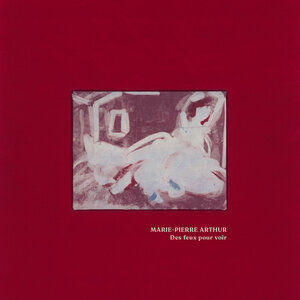
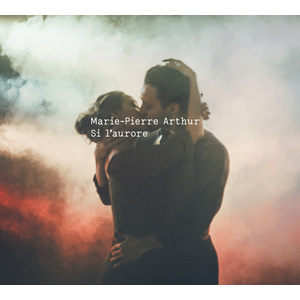
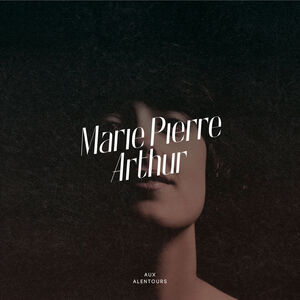
Her subsequent albums deepened that identity. Aux alentours (2012) and Si l’aurore (2015) expanded her sound into richer, more electric terrain, while Des feux pour voir (2019) pushed further toward atmospheric pop, built on rhythmic subtlety and cinematic arrangements. Each record showed a musician unafraid to grow, even as her songwriting remained rooted in emotional clarity and a steady, unmistakable voice.
In 2024 she released Album bleu, her boldest and most contemporary project to date. Embracing electronic textures, R&B grooves, and a more spacious, colourful production style, the album marked a new chapter—one shaped by personal change, new collaborators, and a desire to work outside familiar patterns. It reaffirmed her status as one of Québec’s most distinctive musical storytellers: an artist who evolves constantly while remaining unmistakably herself.
From her beginnings as a sought-after bassist to her place as a celebrated singer-songwriter, Marie-Pierre Arthur’s career has been marked by curiosity, craft, and a rare ability to turn complex emotions into music that feels effortless. More than a decade after her debut, she continues to follow the same instinct that started it all: look ahead, stay open, and trust the songs to show the way.
-Robert Williston
Quinze ans après le début de sa carrière solo, Marie-Pierre Arthur s’offre le cadeau de la minutie avec Album bleu, à paraître à l’automne 2024. Le cinquième album de l’autrice-compositrice-interprète est né grâce au temps investi à placer l’ensemble des idées dans un entonnoir pour ne garder que le résultat le plus intense, conçu avec finesse. Avec son principal collaborateur, François Lafontaine, sa moitié dans la musique et dans la vie, ainsi qu’avec une nouvelle collaboration qui change tout, Sébastien Blais-Montpetit, elle s’est donné le droit d’essayer chacune des pistes. L’expérience de ce dernier avec la musique hip-hop rencontre le rock instinctif de Marie-Pierre Arthur pour mettre au monde un style sans étiquette. « Ça faisait des années que je voulais réaliser ce fantasme de trouver des gens qui avaient envie de jouer avec moi sans qu’on se presse », dit-elle.
Fière de ne jamais commencer un nouveau chapitre avant de se sentir elle-même un peu changée, sincèrement ailleurs, Marie-Pierre Arthur clôt chaque histoire musicale avant que les nouvelles idées émergent. L’aventure Des feux pour voir (janvier 2020), heurtée par une parution en début d’année pandémique, est un album qui s’est vécu de l’intérieur, et qui a aussi pris vie à travers le film Dans tes rêves, alors que la tournée était bordée par l’incertitude.
Cette fois, en studio, la présence de Sébastien Blais Montpetit lui a permis de générer une nouvelle énergie, de briser le moule artistique pour le rebâtir, plus vaste, renouvelé. L’unité créative prend aussi de l’expansion du côté des textes alors qu’elle mélange ses mots avec ceux d’Amylie, de Carole Facal (Caracol), de Gaele, de Mantisse (LaF) et de Rose Perron (Rau_Ze). Ces deux derniers, en plus d’avoir participé à l’écriture, ont aussi joint leur voix en featuring dans deux des nouvelles chansons de l’album .
Stevie Wonder, Sly and the Family Stone, Steely Dan, mais aussi Sza, Frank Ocean et Billie Eilish, notamment, évoluaient dans l’esprit de l’artiste au moment de la composition. Une énergie rock soulève l’ensemble des refrains, parfois épiques, puis l’interprétation, mettant la voix en avant-plan, permet la construction d’un RnB orchestral sans compromis. C’est le renouveau qui marque l’année 2024, alors que les mots, les sons et les idées passent dans une nouvelle atmosphère. En plus des vieux amis, dont Joe Grass, Nicolas Basque, Robbie Kuster, et Olivier Langevin, les nouvelles rencontres prennent un espace de choix sur le cinquième album et la famille devient plus grande avec Sam Eather, Max Bellavance et Lisandre Bourdage (Les Shirley).
L’album bleu s’écoute comme on reçoit un coup de vent frais au visage dès qu’il commence à faire trop chaud. Marie-Pierre Arthur entre de front dans la pop produite et léchée, celle qui fait danser son fils et anime sa maisonnée. L’artiste libère pour une première fois, les mots d’amour, de manière plus concrète. « Ça semble sombre au début et ça finit par exploser en confettis », dit la chanteuse.
D’abord connue comme bassiste, Marie-Pierre Arthur a fait paraître quatre albums, dont un premier, homonyme, en 2009. Aux alentours voit le jour en février 2012, lui valant cinq nominations à l’ADISQ et une place privilégiée parmi les 40 albums de la longue liste du Prix Polaris. C’est également en 2012 que le Prix Félix-Leclerc lui est décerné. Les extraits Si tu savais et Emmène-moi rappliquent encore aujourd’hui comme des vers d’oreilles de première classe, plusieurs années après leur parution. Elle revient nous bercer avec un son renouvelé, baigné d’influences de sa jeunesse et gorgé de plaisir, en février 2015 grâce à Si l’aurore, qui renferme notamment le succès Comme avant. Dans cette prise de risque complètement assumée, elle affirme son intérêt pour la blue-eyed soul et déploie des airs qui lui font du bien. Elle remporte, cette année-là, le Félix de l’Album de l’année – Adulte contemporain.
Après le chargé Des feux pour voir, sorti en janvier 2020, couvert d’éloges et largement récompensé, entre autres par le Félix du Choix de la critique, Album bleu arrive en 2024 chez Simone Records avec la promesse de nous faire bouger ensemble. Constante, solide et parée, Marie-Pierre Arthur nous ramène son style particulier qui lui permet d’imbriquer les mots dans les mélodies comme les morceaux d’un casse-tête parfait. Elle déploie son talent sur neuf pièces dansantes. Et tout le monde est invité.
Au printemps 2025, Marie-Pierre Arthur propose une version bonifiée de son Album bleu, l’Album bleu (Deluxe). C’est avec le désir de donner une deuxième vie à quelques chansons que l’autrice-compositrice, le cœur grand ouvert, s’est entourée de voix qui la touchent particulièrement pour revisiter Respirer l’air, Paradis et Sœurs (feat. Klô Pelgag). Le résultat est tout en harmonies et en douceur. Elle fait aussi le cadeau de Brille autant, une nouvelle création.
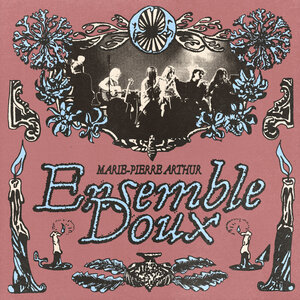
Ensemble doux, c’est le prolongement naturel des concerts intimes qu’avait offert Marie-Pierre Arthur à Montréal et à Québec l’an dernier. Accompagnée de sa belle gang sur scène, Naomie Delorimier (N Nao), Émilie Pompa (Em Pompa) et Raphaël Pépin-Tanguay (Velours Velours), François Lafontaine au piano et Joe Grass à la guitare, Marie-Pierre Arthur a bouleversé son public. À tel point, que l’idée de faire une tournée Ensemble doux s’est imposée d’elle-même.
Un enregistrement en studio qui se rapproche du live, des relectures de chansons choisies parmi ses cinq disques et passées au cycle doux, faisant la part belle au chœur et aux arrangements acoustiques verra le jour à l’automne 2026.
C’est avec Pourquoi que s’ouvre ce cycle doux et c’est comme si ça allait de soi de commencer par le début.
Tracks
72 tracks

-
Déposer les armes
-
Elle
-
Droit devant
-
Ma tête à off
-
Pourquoi
-
Tout ça pour ça
-
Qui sait
-
Sans mémoire
-
Entre nous
-
Le vent m'appelle par mon prénom
Aux alentours (2012)
10 tracks
-
Fil de soie
-
Si tu savais
-
All Right
-
Pour une fois
-
Encore là
-
Emmène-moi
-
Les infidèles
-
Chacun pour toi
-
Chanson pour Dan
-
À partir de maintenant

Rien à faire (2015)
1 track
-
Rien à faire

Si l'aurore (2015)
10 tracks
-
Rien à faire
-
Cacher l'hiver
-
Si l'aurore
-
Il
-
Comme avant
-
Le silence
-
La toile
-
Papillons de nuit
-
Dans ma tête
-
Dis-moi

Dans tes rêves (2019)
1 track
-
Dans tes rêves
Des feux pour voir (2020)
8 tracks
-
La Guerre
-
Les nuits entières
-
Tiens-moi mon coeur
-
Faux
-
Dans tes rêves
-
Des feux pour voir
-
Les nuages tombent
-
Puits de lumière

-
Tiens-moi mon coeur II

-
Intro (Version live)
-
Rien à faire (Version live)
-
Déposer les armes (Version live)
-
Si tu savais (Version live)
-
La toile (Version live)

Album bleu (2024)
Showing 10 of 13 tracks
-
Lumière
-
Miroir (feat. Mantisse)
-
Respirer l'air
-
Paradis
-
L'autre hémisphère
-
Je mens
-
Francine
-
Soeurs
-
Jamais (feat. Rose Perron)
-
Brille autant

Ensemble doux (2026)
Showing 10 of 12 tracks
-
Sans mémoire (version Ensemble doux)
-
Pourquoi (version Ensemble doux)
-
À partir de maintenant (version Ensemble doux)
-
Emmène-moi (version Ensemble doux)
-
Il (version Ensemble doux)
-
Chanson pour Dan (version Ensemble doux)
-
Le vent m'appelle par mon prénom (version Ensemble doux)
-
Rien à faire (version Ensemble doux)
-
Je mens (version Ensemble doux)
-
Si tu savais (version Ensemble doux)
Discography
Featured Titles





Albums
Singles
Gallery
Images
4 images
Marie-Pierre Arthur
Marie-Pierre Arthur
Marie-Pierre Arthur

Arthur, Marie-Pierre
Media
Videos
1 video