Artist / Band
Western Union
Biography
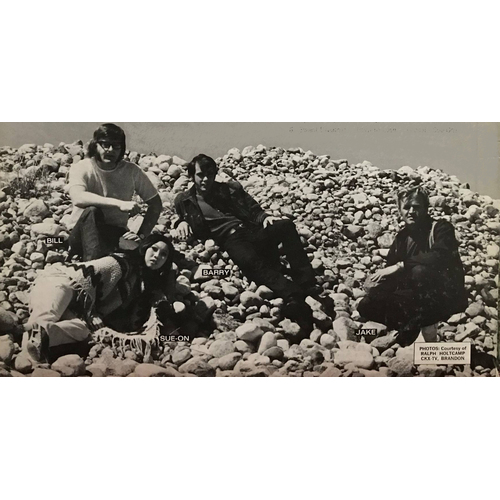
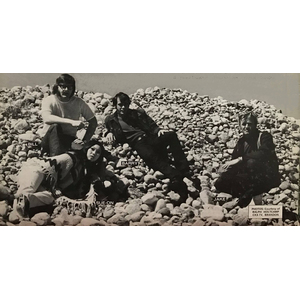
Western Union were a Westman-based country-rock and folk group whose career grew directly out of Manitoba’s late-1960s television, touring, and exhibition circuit. Fronted by husband-and-wife duo Bill and Sue-On Hillman alongside Jake Kroeger and Barry Forman, the band became a familiar presence on regional television and live stages, logging years of regular TV work, multiple Canadian tours, and countless stage performances before turning to recording.
Sue-On Hillman, born in China and raised partly in Hong Kong before settling in rural Manitoba, brought a distinctive versatility to the group as a vocalist, pianist, and drummer, while also working professionally as a teacher. Bill Hillman, a native of Strathclair, Manitoba, handled lead guitar and vocals and had already built substantial road experience, including touring with Bobby Curtola and appearing on shows with artists such as the Everly Brothers and Roger Miller. Rhythm guitarist and vocalist Jake Kroeger, based in the Rapid City area, drew on a background in gospel and quartet singing, while Barry Forman, a chemistry teacher from Rivers, Manitoba, anchored the band’s rhythm and Cajun-flavoured fiddle identity, shaped by both classical violin training and appearances with Canadian mainstays like Don Messer and Tommy Hunter. During this period, the band’s lineup also included guitarist and vocalist John Stefanuk, who had previously been a member of the Cranbrook group The Tycons.
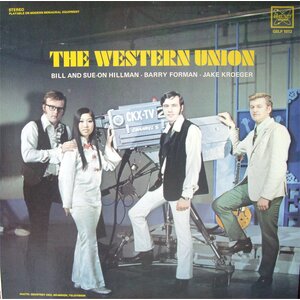
By late 1969, Western Union had established themselves across television, radio, tours, and club work, but Manitoba’s limited studio infrastructure made recording a challenge. Their search for a way onto record led them to Winnipeg’s Galaxy Records, operated by Alex Moodrey, who had experience producing and distributing Ukrainian and other ethnic recordings. The resulting deal produced the group’s debut LP, The Western Union (Galaxy, 1970), recorded live in a makeshift setup in the Winnipeg Grain Exchange building. While the album captured the band’s on-stage variety and energy, heavy post-production echo and limited control over the final sound left the group dissatisfied with the finished product, even as the record sold reasonably well through their television exposure and live following.
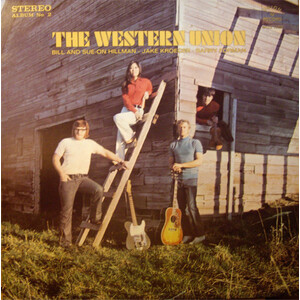
Rather than discouraging them, the experience pushed Western Union toward independence and greater artistic control. In 1971, the band entered Century 21 Studios in Winnipeg with engineer John Hildebrand, embracing true multitrack recording for the first time. The sessions added Ted Paley on drums and expanded the group’s sound through the arrangements and keyboard work of Larry Clark, a Brandon-area jazz musician and university lecturer who contributed piano, organ, and vibraphone. The resulting Album No. 2 (Union IV, 1971) marked a major step forward, allowing layered harmonies, fuller arrangements, and a studio sound that more accurately reflected the band’s musical ambitions.
Through Western Union, Bill and Sue-On Hillman laid the foundation for a long and prolific independent recording and performance career, becoming enduring figures in western Manitoba music. The band’s early albums document a transitional moment in prairie music history, capturing a group moving from the regional television and touring circuit into the emerging world of self-directed independent recording, blending country, folk, rock’n’roll, and Cajun influences into a sound that was both locally rooted and stylistically wide-ranging.
-Robert Williston
Tracks
0 tracks
No tracks available for this artist.
Discography
Featured Titles
Albums
Gallery
Images
2 images
Western Union FOR MOCM
Western Union
Media
Videos
0 videos
No videos available for this artist.