Artist / Band
Denny Vaughan
Biography
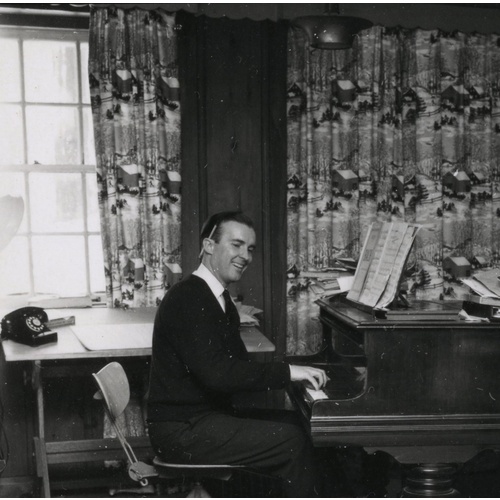
Denny Vaughan was one of the most accomplished and cosmopolitan figures in mid-century Canadian popular music — a singer, pianist, arranger, orchestra leader, composer, and broadcaster whose career carried him from Toronto dance bands and wartime military entertainment to British dance-band stardom, national CBC television fame, Montreal hotel-orchestra leadership, and later high-level musical work in American network television.
Born in Toronto on 21 December 1921, Vaughan was christened Charles Stewart Dennis Vaughan, though he was known throughout his life simply as Denny. Raised in a non-musical family, he discovered music early through a toy saxophone, then button accordion, and finally piano, mastering theory and chord structure with remarkable speed after his mother bought him an upright piano when he was twelve. He gave his first public performance as a child in Toronto’s Moore Park, won an amateur accordion contest at Loew’s Theatre at age thirteen, and by his mid-teens was already playing piano professionally in Muskoka resort orchestras. When a vocalist was needed during one of those early engagements, Vaughan was pressed into service, revealing a strong singing voice that would soon become as important to his career as his piano playing.
As a student at North Toronto Collegiate and later at the University of Toronto, where he studied toward a Bachelor of Music degree, Vaughan was already building a serious professional profile. He appeared in solo vocal and piano spots on CBC and CFRB, played with the Richard Avonde Band at the Brandt Inn in Burlington, and in 1941 became pianist and featured vocalist with Horace Lapp’s orchestra at Toronto’s Royal York Hotel. Even before the war, he was already moving comfortably between society dance work, radio, live performance, and orchestral settings.
During the Second World War, Vaughan enlisted in 1942, intending initially to qualify for the air force, but his musical ability quickly redirected his service. He joined the Canadian Army Show and soon became part of the entertainment units that performed at military bases across Canada before departing for England in 1943. As part of Unit A, Vaughan performed extensively for Canadian and British troops in England and, after D-Day, throughout France, Belgium, Holland, and Germany, often under dangerous wartime conditions. Later, in 1945, he joined the special broadcasting contingent of the Canadian Army Show and became vocalist, pianist, and arranger with the Canadian Band of the Allied Expeditionary Forces under Robert Farnon. Those morale-boosting broadcasts over the BBC’s armed forces network placed Vaughan in an elite company that included the famed American and British military orchestras and helped establish the professional connections that would shape the next phase of his career.
Rather than return immediately to Canada after the war, Vaughan remained in England in 1946 and stepped directly into the upper ranks of British popular music. He joined Carroll Gibbons and His Savoy Orpheans at London’s Savoy Hotel, contributing vocals, piano, and arrangements for Columbia recordings, then moved on to become singer and arranger with Geraldo and His Orchestra between 1947 and 1948. It was in Britain that Vaughan emerged as a genuine star, with fan clubs forming not only in England but also in Australia, Germany, and the British West Indies. Publicists dubbed him “the English Sinatra,” and he became one of the most recognizable Canadian-born singers working in postwar British entertainment. During these years he also worked with major musical organizations and artists including George Melachrino, Cyril Stapleton, Victor Sylvester, Paul Whiteman, and Robert Farnon’s BBC program Journey into Melody.
Vaughan’s British years were especially rich. He recorded both vocal and instrumental sides for labels such as Parlophone and Regal, appeared with top-tier ensembles, and was even among the original members of the vocal harmony group the Johnston Brothers before that act became widely known in its later form. He also contributed a voiceover to the Herbert Wilcox film Maytime in Mayfair, further underscoring how naturally he moved between records, broadcasting, film, and live performance. While singing with Geraldo, he met Helene de Grandprey through fellow performer Eve Beck; the two married in London on 28 December 1949, with Robert Farnon serving as best man.
In 1950 Vaughan shifted his ambitions toward the United States, signing an exclusive contract with Coral Records in New York. There he recorded material including the album Moonlight and Roses and vocal sides such as “Autumn Leaves” and “Patricia,” while also working as a featured singer on the Peter Lind Hayes television show. He played piano under conductors such as Percy Faith and Hugo Winterhalter, provided arrangements for artists including Eddie Fisher and Ezio Pinza, and scored ballet sequences for Kate Smith. At the same time, he was building a reputation as a society bandleader, performing for private functions hosted by prominent American families including the Rockefellers.
By 1952, Vaughan and his wife had returned to Canada, beginning the phase of his career most familiar to Canadian audiences. According to J. Lyman Potts, Vaughan became host and conductor of a 15-minute radio program transcribed in Toronto for Player’s Cigarettes and broadcast coast-to-coast on CBC radio five nights a week through 1953. These themed shows ranged across moods, places, and musical styles, showing off both his versatility and his command as an on-air personality. From there he moved naturally into television, appearing in Toronto on CBC productions beginning in 1954, including regular appearances on The Wayne and Shuster Show.
The most visible expression of that period was The Denny Vaughan Show, along with On Stage with Denny Vaughan, which ran in various summer seasons from 1955 through 1957. These programs established Vaughan as one of CBC-TV’s premier male musical personalities. They also showcased his orchestra on camera for the first time and featured a polished variety format built around Vaughan, vocalist Joan Fairfax, the Don Wright Singers, the BoBolinks, dancers choreographed by Glenna Jones, and featured quartets including the Diamonds and the Add-Fours. The contemporary Music World issues from 1957 confirm his prominence: in the July 15 issue he appears on the magazine’s “Canada’s Kings” page alongside Bob Goulet, Tommy Common, and Wally Koster, identified as a “Singer-pianist-arranger” who “stars in his own show” and is expected back on Canadian television after the summer recess. Another June 1957 issue notes that his program came off the air for the summer on June 17, while other items tie Joy Layne and the Add-Fours directly to his CBC-TV orbit. By the end of the 1957 summer run, however, sponsor Lever Brothers wanted a different format, and the program was cancelled.
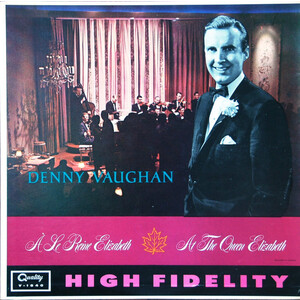
In 1958 Vaughan was recruited to Montreal to open the elegant Salle Bonaventure at the newly built Queen Elizabeth Hotel, a major engagement that placed him at the centre of one of Canada’s most prestigious supper-club and hotel-music settings. Weekly radio programs for both CBC and CBS originated from the venue, and Vaughan’s orchestra accompanied a long roster of international stars. Through the late 1950s and 1960s he remained an important presence in Canadian broadcasting and live entertainment, later serving as musical director for British American Oil Co. Musical Showcase on Canadian television from approximately 1964 to 1966.
Throughout his Canadian return from 1952 to 1967, Vaughan also continued to record both vocal and instrumental material for commercial release and for Muzak. Among his best-known commercial recordings were Johnny Cowell’s “Walk Hand in Hand” and “Forever” on Spiral in 1956. He also became closely associated with the Canadian Talent Library, recording four albums for the project and contributing as both composer and arranger to other CTL releases. That work preserved an important later chapter of his artistry and links him directly to one of the foundational institutions of Canadian content broadcasting in the LP era.
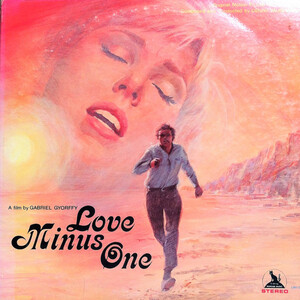
In 1967 Vaughan moved again, this time to California, where his extraordinary adaptability once more carried him into a new tier of professional work. From 1967 to 1971 he served as choral director for The Smothers Brothers Show, produced by Saul Ilson, who had earlier written for Vaughan’s Toronto television work. By 1969 he was acting as musical director or in related senior music roles for a remarkable list of American network programs, including The Glen Campbell Show, The Sonny and Cher Show, Tom Jones, and The Pat Paulsen Show. In 1971 he attempted his first film score for Love Minus One, though the film itself was never released.
After returning to Montreal in 1972, Vaughan turned his attention to his publishing company, Clarendon House Ltd., and his business affairs, but his health was failing. He died in Montreal on 2 October 1972 after a year-long battle with cancer, only fifty years old. By then he had already lived several careers in one lifetime: teenage prodigy, wartime entertainer, British dance-band idol, Canadian radio and television star, society bandleader, Montreal musical host, CTL contributor, and Hollywood television music director — one of the rare Canadian musicians of his era whose career was truly international in scope and stature
-Robert Williston
Tracks
56 tracks
Music To Help Disc Jockeys Get People Out Of Bed By (1962)
Showing 10 of 12 tracks
-
Hi Neighbor
-
Cheerful Little Earful
-
Lucky Day (This Is My Lucky Day)
-
Then I'll Be Happy
-
The Goldiger's Song (With Plenty of Money and You)
-
Fine and Dandy
-
Wake Up
-
Medley : Heigh Ho / Whistle While You Work
-
Ain't We Got Fun
-
Happy Days Are Here Again
A Little Bit of "Country" and a Little Bit of "Pop" (1965)
Showing 10 of 11 tracks
-
Theme from "The Killer of Kildonan"
-
Can't Help Falling in Love With You
-
Three For Two
-
Love Me Tender
-
Stranger on the Shore
-
Northern Dancer
-
Dominion Square
-
The French Song
-
Moonlight Rendezvous
-
I Love You Because
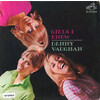
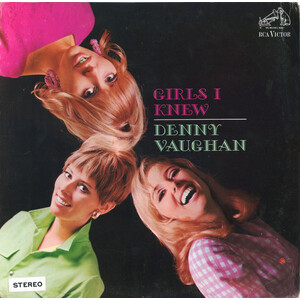
Girls I Knew (1967)
Showing 10 of 11 tracks
-
Judy
-
Hi-Lili Hi-Lo
-
The Girl Next Door
-
An Affair to Remember
-
A Very Precious Love
-
Windy
-
Ramona
-
Mary in the Morning
-
The Girl I Left Behind Me
-
Miss Wistful
Denny Vaughan & His Orchestra (1970)
Showing 10 of 11 tracks
-
Good Morning Starshine
-
Traces
-
My Cherie Amour
-
Put a Little Love in Your Heart
-
Love Theme From Romeo and Juliet
-
Hayseedelic
-
Abergavenny
-
Lonely Evening Time
-
(Sittin' On) the Dock of the Bay
-
Yesterday When I Was Young

Love Minus One, performed by Denny Vaughn (OST) (1971)
Showing 10 of 11 tracks
-
Concerto Finale
-
Light up the Sky (With Love)
-
Light Up the Sky (With Love) Part Two
-
Meeting by Sunset
-
Needle Rock
-
Love Scene
-
The First Try
-
Just like a Flower (vocal Kenny Coleman)
-
Ride Home Rock
-
Kellina
Discography
Featured Titles

Albums
Singles
Gallery
Images
2 images
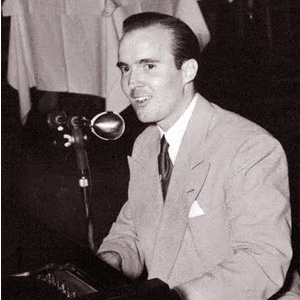
Denny Piano circa 1949b
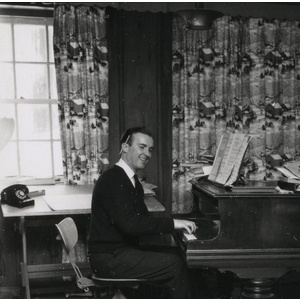
Denny Vaughn
Media
Videos
0 videos
No videos available for this artist.