Artist / Band
The Tear Garden
Biography
The Tear Garden began somewhere over Greenland.
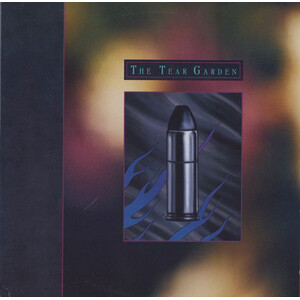
In January 1986 Edward Ka-Spel was flying to Vancouver with a cassette from cEvin Key and a piece of unfinished business in his bag. Key had sent him an instrumental called The Centre Bullet and asked if he could find words for it. Ka-Spel wrote the lyrics on the plane. Once he reached Vancouver they went into a studio, put the voice onto the track in less than an hour, liked what had happened and kept going. Within three or four days they had enough music for a record.
The relationship had started years earlier through the mail. Key had discovered The Legendary Pink Dots through the cassette and compilation underground and began collecting their hard-to-find early tapes. He wrote to Ka-Spel, sent him a collage made from Pink Dots covers and eventually called him in London with friends Debbie Jones and Bill Leeb. By the time Ka-Spel arranged his first North American solo dates, the two already knew one another through letters and telephone calls. Vancouver agent Laurie Mercer set up three shows in Vancouver and one in Seattle, and Key worked the sound desk.
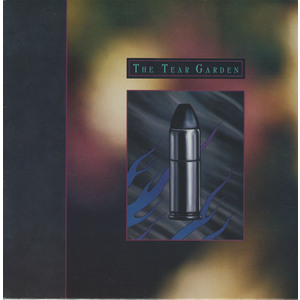
The studio session turned the correspondence into The Tear Garden. Ka-Spel brought the voice, imagery and crooked storytelling of The Legendary Pink Dots. Key brought the machines, tapes, rhythms and studio instincts he had been developing in Vancouver with Skinny Puppy. Dave Ogilvie joined them behind the desk. The four-song self-titled mini-album appeared on Nettwerk in 1986 as NTM 6304.
The catalogue number places it right inside Nettwerk's first great burst of underground music. The label's contemporary mail-order sheet had Skinny Puppy's Remission at NTM 6301, Chris & Cosey's Take Five at NTM 6302 and Severed Heads' Dead Eyes Opened at NTM 6303. The Tear Garden came next. It was a Vancouver record born in the same small label ecosystem that was already carrying Skinny Puppy, Moev, Severed Heads and The Grapes of Wrath far beyond the city.
The first record also contains a direct link to another branch of Vancouver electronic music. Wilhelm Schroeder, credited with bass synthesizer on Tear Garden, was Bill Leeb, who had just left Skinny Puppy and was beginning Front Line Assembly. The sleeve carried a Steven R. Gilmore painting called Hell's Ticket, and Gilmore's artwork was by then becoming inseparable from Nettwerk's visual identity and from the records coming out of the city's industrial scene.
The music already refused the usual side-project rules. The Centre Bullet takes nearly ten minutes to unfold. Ophelia runs past eight. Key's electronics could be hard and mechanical, but Ka-Spel's voice pulled the pieces toward psychedelia, theatre and dream logic. Their backgrounds met in the studio without either one having to imitate the other's main band.
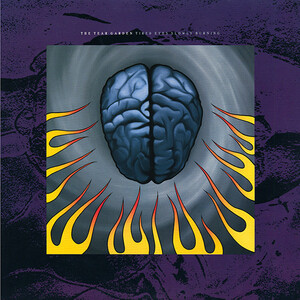
A year later Ka-Spel returned to North America as the opening solo act on a thirty-plus-date Skinny Puppy tour. When the run finished, he and Key went back into the studio. Tired Eyes Slowly Burning was recorded at Mushroom Studios in Vancouver from June 7 to 15, 1987. Dwayne Goettel played keyboards on Deja Vu, Room With A View, Coma and You and Me and Rainbows, Nivek Ogre sang on the last of those, and Dave Ogilvie again worked closely on the recording and mix. The vinyl went out with a message scratched into the run-out groove: AND EVEN THE VEGETABLES SCREAMED.
The album pushed the idea much further. You and Me and Rainbows sprawls across nearly seventeen minutes and was mapped out and finished in the space of a day and a night, while Oo Ee Oo came from an earlier four-track recording dating to 1985. On CD the entire 1986 mini-album was appended to the new record, effectively making Tired Eyes Slowly Burning both a debut album and an archive of the project's first session.
The Tear Garden remained largely a studio creature. Key and Ka-Spel occasionally brought The Centre Bullet onto a stage together during the 1988 European period, and one of those nights survives as the release Center Bullet Live in Strasbourg 1.5.1988, but there was no regular touring band. The records carried the project instead.
When they reconvened at Mushroom Studios in August 1991, the room was much fuller. Dwayne Goettel was now part of the core, and musicians from The Legendary Pink Dots joined in, including The Silverman, Ryan Moore and Martijn de Kleer, along with Dave Ogilvie and De Green Guy. Ken Marshall engineered. The Tear Garden had grown from a two-man studio experiment into a loose transatlantic ensemble.
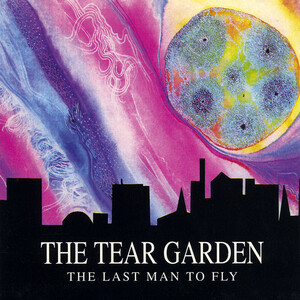
Those sessions produced The Last Man to Fly in 1992 and the Sheila Liked the Rodeo EP in April 1993. cEvin Key later remembered that much of the stranger Sheila material came from improvisations the musicians thought were disappearing as soon as they played them. The engineers quietly kept the tape running. When the band discovered the jams had survived, the accidents became part of the record.
The Last Man to Fly gave the project one of its best-known songs, Romulus and Venus, and moved further into live guitars, bass, acoustic instruments and psychedelia. The widening personnel blurred the border between the Vancouver and European sides of the project. Skinny Puppy musicians and Pink Dots musicians were now appearing inside the same songs.
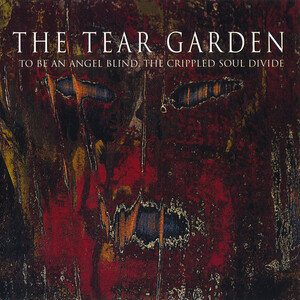
Dwayne Goettel died in 1995. The next Tear Garden album, To Be an Angel Blind, the Crippled Soul Divide, appeared in October 1996 with Key and Ka-Spel joined by The Silverman, Ryan Moore, Martijn de Kleer, De Green Guy and Niels van Hoornblower. Anthony Valcic handled production. Even the title acquired one of the odd little scars that collect around long-running underground records: the word Crippled was supposed to be Cripple, and the final letter was added by mistake somewhere in production. The correction waited until the 2020 reissue.
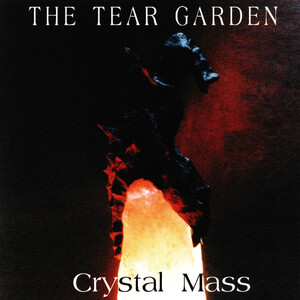
Crystal Mass followed in October 2000 and showed how strange the working method had become. Key described it as a long-distance relationship carried on through sessions in pieces. Ryan Moore came over for a month and a half, engineer Frank Verschuuren arrived later, Ka-Spel came in for a few days of vocals, then Key travelled to Holland and recorded further material there. The album took roughly a year and a half to assemble between Key's subConscious studio and Studio Klaverland in the Netherlands.
Key also put his finger on what had kept The Tear Garden distinct. The project gave the musicians room for acoustic instruments, psychedelia and slower, stranger textures that did not belong naturally inside Skinny Puppy or Download. Ka-Spel likewise saw the collaboration as a place where different people and different methods could alter the direction of the music.
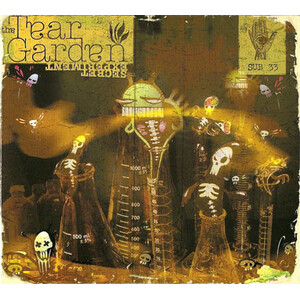
The pace slowed, but the partnership never really ended. The Secret Experiment surfaced through Key's Subconscious Communications in 2007, in an edition of a thousand, after he went hunting through his hard drives and found more than a dozen forgotten Pro Tools sessions. He sent them to Ka-Spel, who wrote into them over the following months. Have a Nice Trip followed in 2009, and further archival releases arrived over the next decade, among them Eye Spy Vol. 2 in 2017 and the Bandcamp anthologies Mushroom Clouds, 99 Lives To Ponder and 2020 Visions.
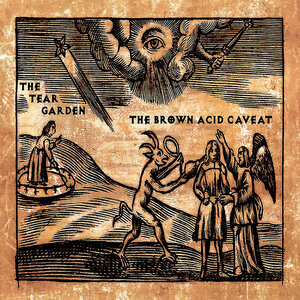
In 2016 Key and Ka-Spel used a PledgeMusic campaign to finance another full-scale Tear Garden record. The money gave them enough room to bring in guest musicians, including Patrick Q. Wright on violin and viola, Martijn de Kleer on guitar, Ryan Moore on bass and Dre Robinson on percussion, and to have Greg Reely handle the mix and master. The Brown Acid Caveat arrived in July 2017, thirty-one years after the first Vancouver session.
The title carried the old Tear Garden sense of humour with it. The Brown Acid Caveat referred back to the famous Woodstock warning, while the band connected it to the old Tired Eyes Slowly Burning line about pouring jars into reservoirs. Those jars, they said, were now on the highest shelf of a kitchen cupboard with the key thrown into the ocean. Ka-Spel described the record as another attempt to put beauty into an ugly landscape.
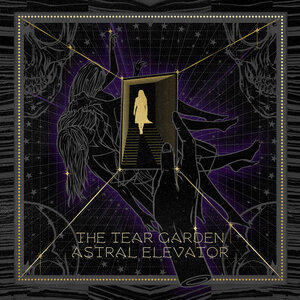
Then the correspondence reached another remarkable chapter. Astral Elevator appeared on October 24, 2025 through Toronto's Artoffact Records, the first Tear Garden album for the label. Key and Ka-Spel produced it themselves, Greg Reely mixed and mastered it, Simon Paul designed the package, and the fifteen songs carried guest appearances from Randall Frazier, Dre Robinson and the late Dwayne Goettel, whose presence tied the record directly back to the late-1980s and early-1990s Tear Garden.
In interviews around Astral Elevator, both men described a working method that still sounded surprisingly close to the beginning. Key creates large amounts of raw material, hears something that feels right for Ka-Spel and sends it across, flagging his favourites. Ka-Spel takes the piece apart, writes into it and changes its shape. Neither man knows exactly where it will end. Key has said he still relies on chance, improvisation and what he calls happy accidents. Ka-Spel heard a link between Astral Elevator and the earliest Tear Garden recordings, with forty years of new tools available to push the ideas further.
For almost its entire life, The Tear Garden existed on records and in very occasional shared performances. That is finally changing. The band's first proper tour begins in Los Angeles on September 14, 2026 and runs to Montreal on October 5, with Key on synthesizers, machines and drums, Ka-Spel on voice and devices, Dre Robinson on machines, Erik Drost on guitars, Randall Frazier on synthesizers and Joep Hendrikx on live electronics. Between those two nights come San Francisco, Seattle, Portland, Salt Lake City, Denver, Minneapolis, Chicago for Cold Waves, Cleveland, Washington, New York, Cambridge and Toronto.
Forty years after Ka-Spel wrote the words to The Centre Bullet on an aeroplane, the project is still built on the same friendship. One musician in Vancouver sent a cassette across an ocean and heard a voice in his head that he thought would fit. The singer wrote back. Everything since has grown from that exchange.
-Robert Williston
Tracks
29 tracks
The Center Bullet (EP) (1986)
4 tracks
-
The Center Bullet
-
Ophelia
-
The Tear Garden
-
My Thorny Thorny Crown
Tired Eyes Slowly Burning (1987)
10 tracks
-
Déjà Vu
-
Room with a View
-
Coma
-
Valium
-
You and Me and Rainbows
-
Oo Ee Oo
-
The Centre Bullet
-
Ophelia
-
Tear Garden
-
My Thorny Thorny Crown
Astral Elevator (2025)
Showing 10 of 15 tracks
-
A Return
-
Going Up
-
Lady Fate
-
Square Root
-
It Just Ain't So
-
In the Name Of
-
Exorcism
-
Toten Tanz
-
War Crier
-
Swallow the Leader
Discography
Featured Titles
Albums

12"
Gallery
Images
1 image
Tear Garden, The
Media
Videos
0 videos
No videos available for this artist.