Artist / Band
R. Taylor Dean
Biography
Born and raised in Toronto, Canada, R. Dean Taylor made his first entry into the world of music at the age of 12, singing at various open-air Country & Western shows in the Toronto area.
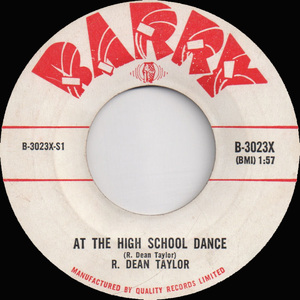
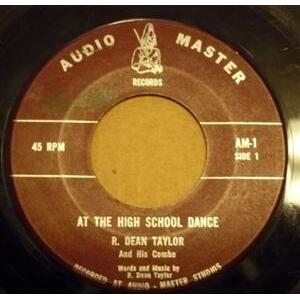
In 1960 he recorded his first record, "At the High School Dance," which played across Canada and on CHUM Radio, Toronto' s power-house radio station. He appeared on a CBC dance party TV show and started playing clubs and other venues around the Toronto area and toured the States for a short time.
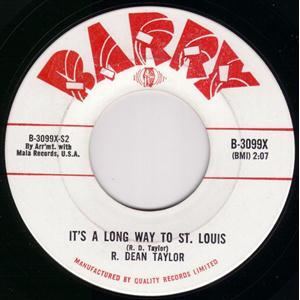
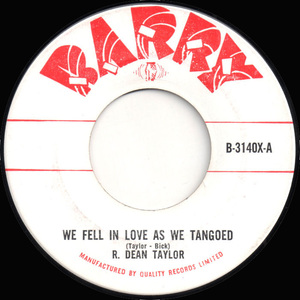
Dean went to New York in 1962 and cut four sides which were distributed on the AMY- MALA label: "I'll Remember," "It's A Long Way to St. Louis," "We Fell In Love As We Tangoed," and "Beautiful Dreamer"
In 1963 a friend from Detroit called him about a newspaper article featuring an up-an-coming record company called Motown Records and said he could arrange an audition. Dean was fortunate enough to meet with Brian Holland and Lamont Dozier of Motown's top producing team, Holland, Dozier, Holland. They liked his material and Dean was immediately signed as a writer and artist for the label. Dean started working with Eddie Holland, sitting for hours tossing ideas back and forth and coming up with lyrics for many of the Holland/Dozier hits.
…Eddie was a fantastic writer, he could write from a woman's point of view as well as a man's, and I really learned a lot from working with him. I wanted to learn everything I could about producing and started playing tambourine on the Holland/Dozier sessions. I played on most of their records, such as "Standing In the Shadows of Love," "Reach Out," and many more. Seeing the innovative way Brian and Lamont used new sounds in their productions, such as footstomps on an old board as the intro on "Where Did Our Love Go" and many other gimmick sounds, was an inspiration. Watching Holland/Dozier produce, and playing with those great musicians now referred to as The Funk Brothers, was more than I could have ever hoped for.
As a writer, Taylor's credits include such hits as "Love Child" and "I'm Living In Shame" by the Supremes, "All I Need" by the Temptations, "I'll Turn To Stone" by the Four Tops, and "Just Look What You've Done" by Brenda Holloway.
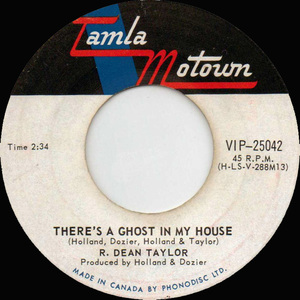
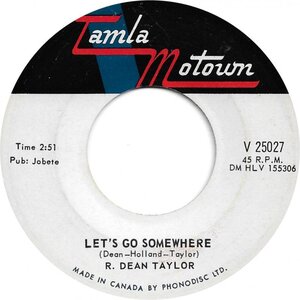
Dean recorded his own record, "Let's Go Somewhere" in 1965, a subtle war protest song, but not much happened. In 1966 he recorded "There's A Ghost In My House." but f ound out from a friend that there was little or no promotion on the record since they were concentrating on promoting the established Motown acts. Four years later in England, a club DJ started playing "There's A Ghost in My House" and it became popular. Other dance clubs picked up on the record and Motown UK released it as a single, and it went to the top of the charts in England and throughout Europe.
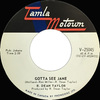
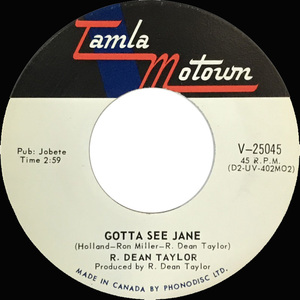
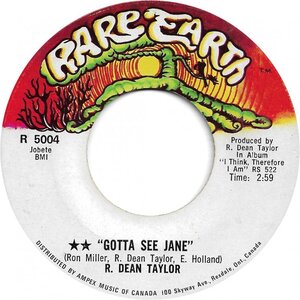
"Gotta See Jane," written in 1967 on a rainy drive to Toronto, became another English hit but received no promotion in US.
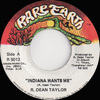
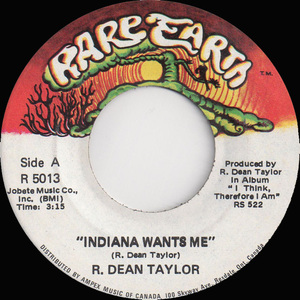
In 1970, Dean recorded "Indiana Wants Me" which he always felt would be a hit record. Two radio stations broke the record in the States. Disk jockey, Scott Regen, believed the record was a hit and fought to get the record played on WKNR in Detroit. At the same time, program director, Rosalie Trombley put the record on the powerful CKLW playlist in Windsor, Ontario. Dean went to Motown Vice President, Barney Ayles, and asked him if he could put some heavy promotion behind this record. Ayles knew it was getting airplay and the record was getting positive feedback so he agreed to hire an independent promotion man, Al Valente, to go out with Taylor on a promo tour to stations, large and small, in the Michigan area. More and more stations began playing "Indiana" and Barney told the Motown promotion department to get behind it. Dean also appeared on CKLW's The Robin Seymour TV Show a number of times. "Indiana Wants Me" became a million-seller and climbed to #1 on the US charts, making R. Dean Taylor the first white artist in the history of Motown to do so.
Dean's songs continue to receive International airplay and have been covered by several artists. Currently, Dean has built a recording studio in his home in Los Angeles and is working on a new CD and writing a book about his Motown memories.
Toronto:
I began playing clubs in Toronto and recorded my first record at Bert Hunt’s studio on the Audio Master label. The studio was at 636 Church Street and is now an Indian Restaurant. “At The High School Dance” was later released on Barry records. Musicians on this recording included Jack Posluns on drums, who later played with Marvin Gaye on the road, and Pete Traynor on bass, who later founded Traynor Amps.
Biography Old:
R. Dean Taylor was one of a small group of White singers and songwriters, who achieved success, during the late Sixties and early Seventies, at the Tamla Motown imprint.
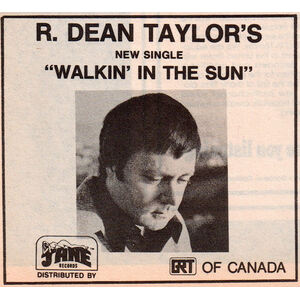
He is best remembered for the singles ‘Indiana Wants Me’, Gotta See Jane’, and ‘There’s A Ghost In My House’, which were hugely successful during this era.
Born in Toronto in 1939, Richard’s career began in his hometown, when he played in several groups, as a pianist and singer, circa 1961.
In 1960 and 1961, he made his first recordings for the Audio Master 1, Barry and Mala imprints.
With Audio Master 1, he recorded ‘At The High School Dance’ b/w ‘How Wrong Can You Be?’ in 1960.
A year later, he re-released the single, but this time for the Barry imprint.
1962 saw a follow up 45 entitled ‘I’ll Remember’ b/w ‘’It’s A Long Way To St. Louis’, which was released on Mala Records, also seeing a release on the Barry imprint for the Canadian market at the same time.
The single reached number 23 on a local Toronto based radio station,, was followed by another Barry 45, entitled ‘We Fell In Love As We Tangoed’ b/w ‘Beautiful Dreamer’, after which Richard decided to relocate to Detroit, Michigan to improve on his success.
Following the Detroit move in 1964, Richard was hired by Motown Records, mainly as a songwriter and recording artist for the Motown subsidiary V.I.P. label.
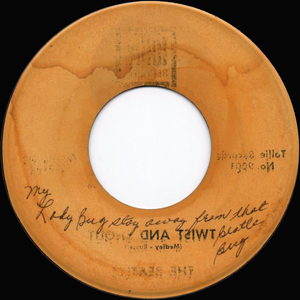
He had penned a debut 45 topical release, entitled ‘My Ladybug (Stay Away From That Beatle)’, however, the song remains unissued.
His first official V.I.P. release came in 1965, with the single ‘Let’s Go Somewhere’ b/w ‘Poor Girl’.
The song was penned by Richard and Brian Holland, with production chores provided by Brian Holland and Lamont Dozier.
‘Let’s Go Somewhere’ was mildly successful, however, his 1966 follow up, ‘There's A Ghost In My House’ received much greater interest.
The track was also penned by Holland–Dozier–Holland and Richard, and was also produced by Brian Holland and Lamont Dozier.
‘There's A Ghost In My House’ was later to reach number 3 in the United Kingdom charts in 1974.
His next V.I.P 45 was also a hit later down the line, entitled ‘Gotta See Jane’ b/w ‘Don’t Fool Around’, this track helped cement his reputation as a songwriter, which led to several of his songs being recorded by other Motown acts.
‘I’ll Turn to Stone’ by the Four Tops, and "All I Need" by The Temptations were both R. Dean Taylor co-written originals, and hits in the U.S. singles charts in 1967.
‘Gotta See Jane’ b/w ‘Back Street’, (the a-side co-written with Brian Holland), became a Top 20 hit in the U.K. following it’s re-release on the Rare Earth imprint in 1971.
By this time Richard had become a member of the Motown writing and production team known as ‘The Clan’.
The Clan comprised of Pam Sawyer, Frank Wilson, Deke Ricahrds and R. Dean Taylor.
Whilst the Corporation were penning hits for the Jackson 5, the Clan took over the generation of material for Diana Ross & the Supremes (following the departure of the Holland/Dozier/Holland team who left to set up Invictus Records).
The Clan penned Diana Ross & the Supremes' number 1 U.S. hit ‘Love Child’ and their number 10 follow-up ‘I’m Livin' In Shame’.
Richard realised his biggest solo successes post 1970, releasing material on Motown’s subsidiary Rare Earth Records (a label dedicated to Motown’s growing roster of White performers).
‘Indiana Wants Me’ b/w ‘Love’s Your Name’, became a number 1 hit in 1970 in Canada.
In the States, the song reached number 5 on the Billboard Hot 100 chart, and at number 2 in the U.K.
‘Gotta See Jane’ was also reissued in 1971, and became a Top 10 success in Canada.
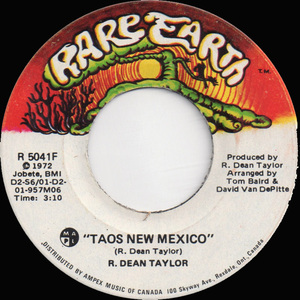
His follow up 1972 single ‘Taos, New Mexico’ b/w ‘Shadow’ did less well.
Richard continued to write for artists at Rare Earth, until the label folded in 1976.
He released one 45 for the Farr imprint in 1976, entitled ‘We’ll Show Them All’ b/w ‘Magdalena’, however, Richard was not to chart again as a solo artist.
During the Eighties, he recorded some sides for the 20th Century and Strummer imprints.
These included ‘Let's Talk It Over’ b/w ‘Add Up The Score’ (in 1981) and ‘Out In The Alley’ b/w ‘Bonnie’ (in 1982).
In recent years, Richard has established his own record company, called Jane Records.
‘Indiana Wants Me’ was featured in the 1980 American movie, ‘The Ninth Configuration’.
Tracks
38 tracks
-
At the High School Dance
-
At the High School Dance
-
It's a Long Way to St. Louis
-
Beautiful Dreamer
-
We Fell in Love as We Tangoed
-
My Lady Bug Stay Away From That Beatle Bug
-
Poor Girl
-
Let's Go Somewhere
-
Poor Girl
-
There's a Ghost in My House
-
Don't Fool Around
-
Gotta See Jane
-
Don't Fool Around
-
Indiana Wants Me
-
Love's Your Name
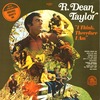
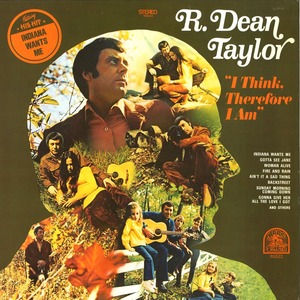
I Think, Therefore I Am (1970)
10 tracks
-
Gotta See Jane
-
Fire and Rain
-
Woman Alive
-
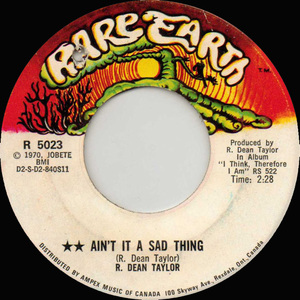
Ain't it a Sad Thing
-
Indiana Wants Me
-
Back Street
-
Two of Us
-
Sunday Morning Coming Down
-
Gonna Give Her All the Love I've Got
-
Love's Your Name
-
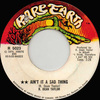
Ain't it a Sad Thing
-
Back Street
-
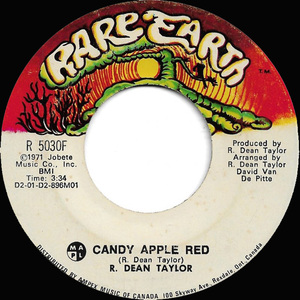
Candy Apple Red
-
Woman Alive
-
Taos New Mexico
-
Shadow
-
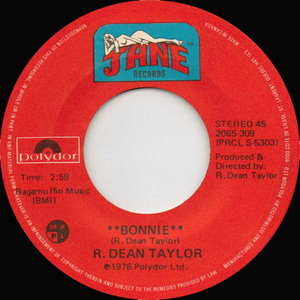
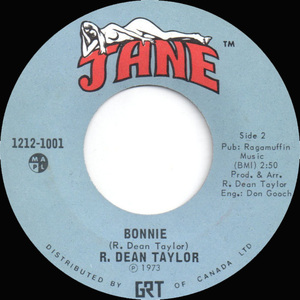
Bonnie
Bonnie b/w Hannah (1976)
1 track
-
Bonnie
Motown Unreleased 1963-64 (2014)
5 tracks
-
Dont Fool Around - Version 1 (1964)
-
Little Girl, I'm Going To Marry You (1964)
-
No Longer a Rebel (1963)
-
Respectable Distance Away (1963)
-
Surfers Call (1964)
Discography
Featured Titles
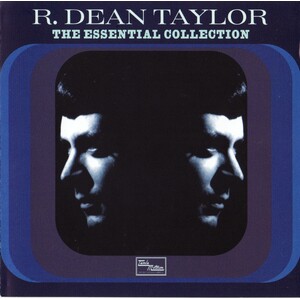
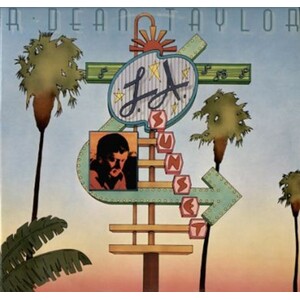
Albums
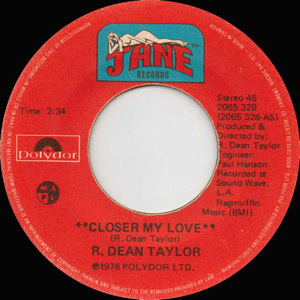
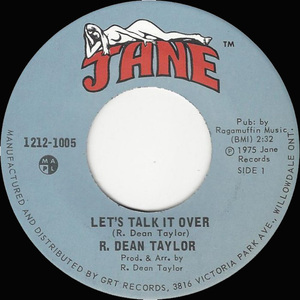
Singles

Compilation Tracks
Gallery
Images
13 images
View All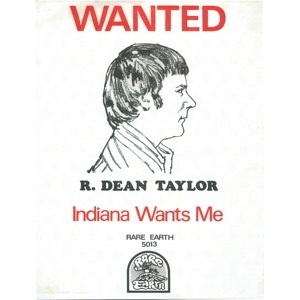
Motown hired independent promotion man, Al Valente to work the record. He decided to release the promo copies for the radio stations on red vinyl.
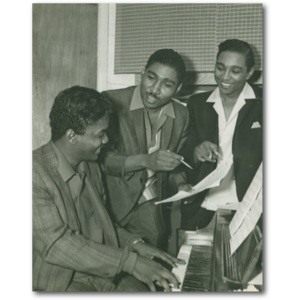
Writers, Lamont Dozier Eddie Holland,& Brian Holland.
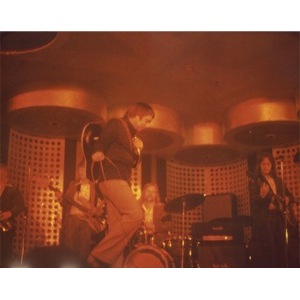
Performing at the Bailey’s circuit of nightclubs and Wigan Casino in England.
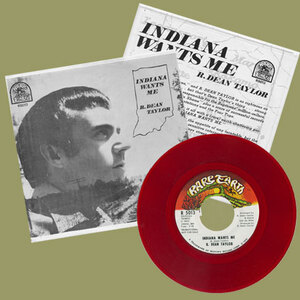
When "Indiana Wants Me" was released, the content was controversial. We had to remove the police siren to get airplay in California. That's why there are some versions without the sound effects.
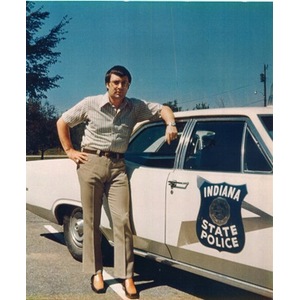
Motown hired independent promotion man, Al Valente to work the record. He decided to release the promo copies for the radio stations on red vinyl.
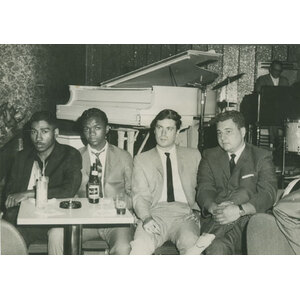
Photo taken at the 20 Grand in Detroit, where many of the Motown acts performed. (left to right: Brian Holland, Lamont Dozier, R. Dean Taylor, Don Gooch)
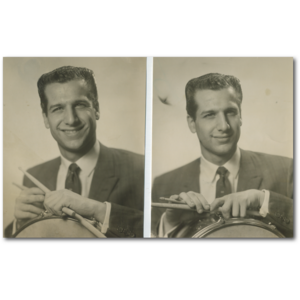
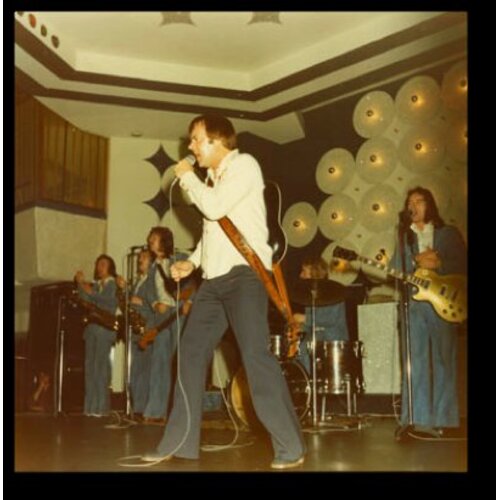
Jack Posluns was the drummer in my first band. He played on “At The High School Dance,” my first record on Audio Master Records. We played a lot of gigs together and Jack later played drums for Marvin Gaye on the road2
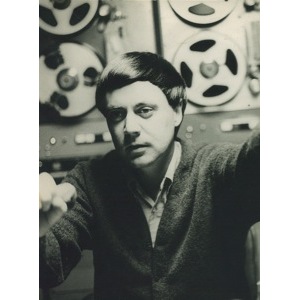
Mixing in the Hitsville control room. Notice the tape machines are mounted vertically because of the small size of the control room.
Media
Videos
0 videos
No videos available for this artist.