Artist / Band
Southbound Freeway
Biography
Southbound Freeway took their name from Highway 2, the road south from Edmonton to Calgary. Brothers Dwayne and Richard Osepchuk had come up through the CJCA Chessmen, who played sock hops, community halls and CHED Bandstand from 1962 and cut fuzz-guitar instrumentals like 'Fuzzy Wuzzy', then spent about a year in Li'l Davey & The Drastiks. For the new band, with Dwayne on guitar, the brothers brought in Ron Turko on keyboards, Ken Koshelek on drums and Gerry Dayle on bass.
In 1966 Wes Dakus was giving up bass and retiring The Rebels, and he and Barry Allen went looking for a band Allen could carry on with. "They liked our sound and the solid harmonies," Dwayne Osepchuk recalled. Allen joined, and for a short while the group played out The Rebels' remaining dates under the old name. Around then Allen got a letter asking him to join The Guess Who. He turned it down and stayed with Southbound Freeway.
By early 1967 the band was booked through Rayal Talent Agency and recording for Pace with Ray Schwartz. Their single 'Dead End Street' b/w 'Something Better' opened Direct From the Rainbow Ballroom, the all-Edmonton album Pace released on August 1, 1967. The sleeve introduced Southbound Freeway as a six-piece and called singer Mo Boyer "as exciting an entertainer as you will ever encounter."
That August they won the semi-professional class at the Klondike Teen Festival battle of the bands, and the prize was a trip to New York for the Vox Battle for Stardom. Allen, who had missed the Edmonton contest, went with them. On August 12, 1967 they played Forest Hills Stadium in Queens on a bill that ended with The Doors and Simon & Garfunkel, in front of a crowd of about 14,000. They finished third and came home with $1,500.
Dayle and Turko left after the New York trip and Brad Carlson came in. The band toured Canada and into the United States, made the first of two appearances on CBC's Let's Go, and often shared double bills with Coloured Rain, Allen's other backing band. When Allen and Carlson moved to Montreal to start Purple Haze, the Osepchuks went to Daisy Hill Puppy Farm for singer and keyboardist Mavis McCauley and brought Boyer back with her. "Back then, women in rock bands were almost an anomaly," McCauley said, "especially if they could actually play an instrument."
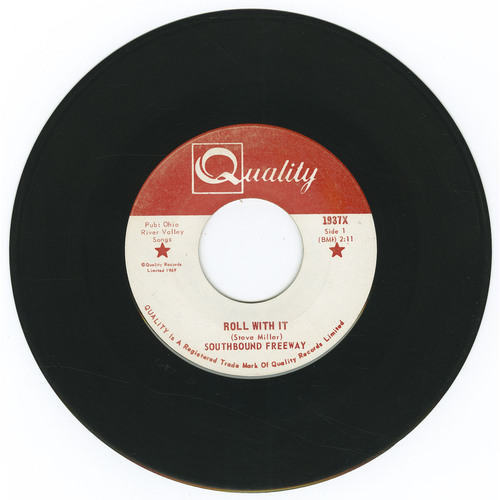
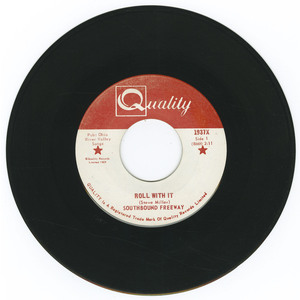
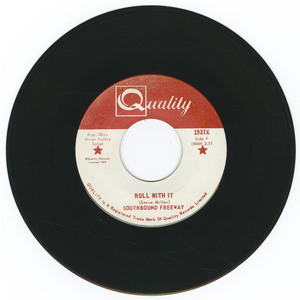
There was almost nowhere to make a proper record in western Canada, so in the spring of 1969 Dakus helped get them time with Norman Petty at his studio in Clovis, New Mexico, where Buddy Holly had recorded. The Clovis lineup was Dwayne Osepchuk on guitar, Richard Osepchuk on bass, Koshelek on drums, McCauley on keyboards and vocals, and Boyer on vocals. Roulette Records showed interest, and Petty warned them off the label. Atlantic took one single instead: Steve Miller's 'Roll With It' backed with McCauley's own 'Don't Go Cryin'', with McCauley singing lead. It came out on Atco (45-6690) in the United States and Quality (GL 1937X) in Canada that summer. With no manager to push it, the record faded, and by the time the band could have gone back to Clovis the chance had passed.
The same year Mary Saxton and Barry Allen sang on Born to Be Wild, a Birchmount album (BM 515) credited to The Rising Sun, with Southbound Freeway and The Lords named as the backing bands. Ray Schwartz produced, McCauley arranged and Allen engineered, and the twelve songs ran from Jimi Hendrix's 'Fire' and Sly Stone's 'I'm an Animal' to 'Wishin' and Hopin''. The sleeve thanked the Harmony Kids for the loan of their equipment.
The lineup shifted again soon after. McCauley left to go solo, and Boyer traded places with Mary Saxton, going to Li'l Davey Peters' band while Saxton sang with Southbound Freeway for a short time. The group then cut its name down to The Freeway, with Bob Alexander replacing Saxton on vocals and Wayne Schneider on keyboards. At Wally Heider's studio in San Francisco, with Dakus and McCauley producing, they recorded 'Right Now, Good Vibrations' and 'You Don't Have to Be', which London released as a single (M 17448) in 1973.
The Freeway played on until 1976 and reunited for Edmonton's Rock & Roll Reunions in 1988 and 1989. Mo Boyer died in 1977 and Ken Koshelek in 2005. In 2011 Super Oldies gave the Clovis sessions a full hearing on From Canada to Clovis, adding four tracks that had sat unreleased since 1969: 'You Can't Keep a Good Man Down', 'By Myself', 'Seven Days Is Too Long' and 'The Old Rock Sound', which Dwayne Osepchuk wrote with Dermond Murray. On New Year's Eve 2012 Dwayne was still leading The Freeway, opening the CJCA Chessmen's farewell show.
-Robert Williston
Tracks
2 tracks
-
Roll With It
-
Don't Go Crying
Discography
Featured Titles
Singles
Compilation Tracks

Gallery
Images
1 image
Southbound Freeway
Media
Videos
0 videos
No videos available for this artist.