Artist / Band
Shockers
Biography
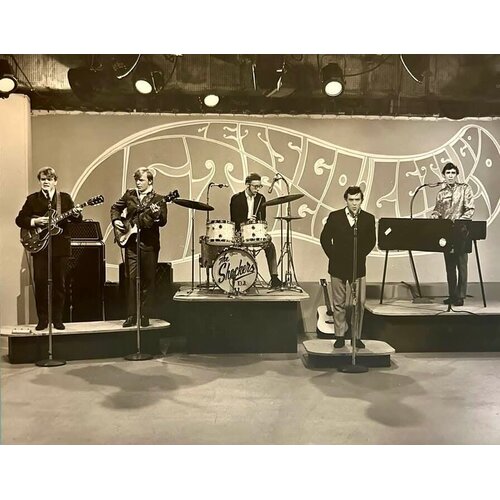
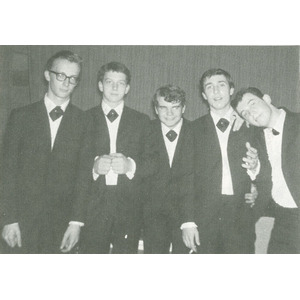
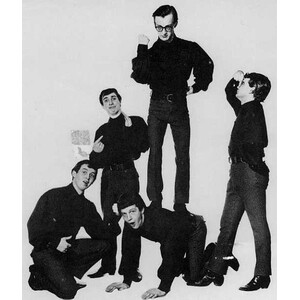
The Shockers began at Gladstone Secondary in East Vancouver, a school-band project that grew far beyond its modest beginnings. Early members remember that in 1965 only guitarist Mike Wilson had any real technical footing; drummer Dave Jonsson, singer Keith Foreman, bassist Karl Erickson and keyboardist Ed Coppard learned their instruments as they went. What they lacked in polish they made up for in energy, and they quickly found their way into Vancouver’s packed schedule of youth dances, gym shows and weekend halls that defined the city’s mid-sixties music culture.
Their reputation developed quickly. A now-classic memory from History of Vancouver Rock & Roll describes a Shockers dance aboard The Lady Alexandra, Vancouver’s floating restaurant. It was a jacket-and-tie ballroom packed with teenagers, the floor heaving under hundreds of pounding feet. Sweat, smoke and noise filled the room while the ship itself rocked visibly on Burrard Inlet. Up on deck, only the Shockers’ bass line and the harbour at night carried through the air, the water sending out white-capped ripples in time with the band. The writer remembers thinking, what a perfect name this group had chosen.
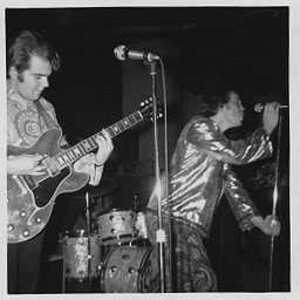
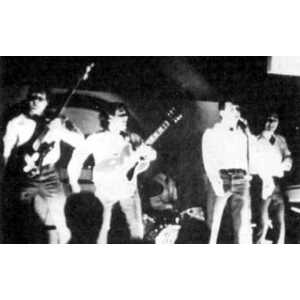
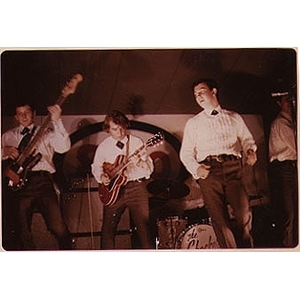
Onstage they leaned into that electricity. Foreman’s trademark finale involved leaping onto the organ and hammering the keys with hands and feet while Wilson’s guitar, Coppard’s keys, Erickson’s bass and Jonsson’s drums blasted through what became their signature: fast, tight, crash-driven R&B with a hard British Invasion edge. They were young, unrestrained and determined to play louder and wilder than anyone else in the room.
The Pacific National Exhibition’s Teenage Fair Battle of the Bands became their proving ground. In 1965 the Shockers finished fourth out of sixty-nine groups—impressive for a school-based band—but they spent the next year sharpening arrangements and broadening their repertoire. When they returned in 1966, they won first place over seventy-five competing groups. The prize was a recording session with RCA Canada International.
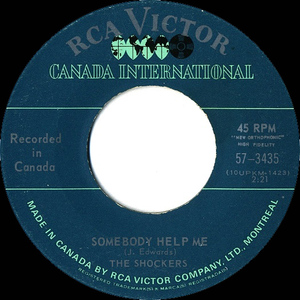
Their single, a fuzztone-charged version of the Jackie Edwards / Spencer Davis Group hit Somebody Help Me backed with I Can’t Make It (RCA Victor International 57-3435), was released in 1967. It spent eleven weeks on C-FUN’s All Canadian Top Ten and picked up airplay across the country, giving the Shockers national visibility. Its reputation has only grown, resurfacing on compilations such as History of Vancouver Rock & Roll Volume 2 and on live collections that show how fierce they were at their peak.
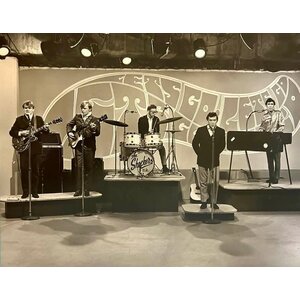
Television followed. After their RCA release, the Shockers were invited to perform on CBC’s Let’s Go. True to form, they staged a stunt ending inspired by The Who: Foreman smashed a cheap acoustic guitar while the band set off smoke bombs. The smoke poured through the studio so heavily that staff had to open the large bay doors onto Georgia Street just minutes before the live news broadcast, letting clouds drift out into rush-hour traffic.
The band’s live footprint extended across Vancouver’s top rooms. They shared stages with major local acts such as the Centaurs and Jason Hoover & the Epics, played key venues like Oil Can Harry’s and the Marco Polo, and opened for the Everly Brothers at The Cave, one of the city’s most prestigious supper-club stages. That mixture—schoolyard beginnings, high-energy teen dances, national radio play and marquee nightclub bookings—put them at the centre of the city’s most dynamic musical era.
Only one studio single exists, but their catalogue effectively continued through their members. After the Shockers ended in 1968, Coppard, Jonsson, and former Shockers bassist Roy Kessler regrouped as Penny Whistle, then evolved into the psych-rock trio Trilogy with bassist Ed Patterson. Trilogy became a fixture at Vancouver’s Daisy and Oil Can Harry’s, even opening for Billy Preston at the Marco Polo. Coppard later emerged under the name C.B. Victoria, scoring a local hit with I Don’t Believe In Miracles, while Jonsson became an in-demand Pacific Northwest drummer in bands including Bowser Moon and Foxfire.
Other Shockers alumni spread throughout the broader Vancouver rock network. Bassist George Chapelas later appeared in groups such as Trials of Jayson Hoover, Pirannah Brothers, Night Train Revue and Black Snake Blues Band—typical of how deeply interconnected the city’s musicians became as the sixties rolled into the seventies.
What survives—on tape, in photographs, and in memories—is the imprint of a Gladstone High band that grew into one of Vancouver’s most exhilarating live acts, blasted smoke into the CBC studios, rocked a steamship on Burrard Inlet, won the PNE’s biggest contest and left behind a single that remains one of the defining artefacts of the mid-sixties Vancouver explosion.
-Robert Williston
Members
Keith Foreman: vocals, organ
Mike Wilson: guitar
Joachim “Rocky” Knauer: lead guitar
Ed Coppard: keyboards
Graham Kinnear: organ
Dave Jonsson: drums, vocals
Karl (Carl) Erickson: bass
George Chapelas: bass
Heartz Godkin: bass
Jean “Carter” Laloge: bass
Roy Kessler: bass
In Memory of
George Chapelas
Roy Kessler
Jean “Carter” Laloge
Tracks
2 tracks
-
Somebody Help Me
-
I Can't Make It
Discography
Featured Titles
Singles
Compilation Tracks

Gallery
Images
7 images
The Shockers (5)
THE SHOCKERS FOR MOCM
The Shockers (1)
SHOCKERS 001
The Shockers (4)
The Shockers (6)
Shockers
Media
Videos
1 video