Artist / Band
Doug Riley
Biography
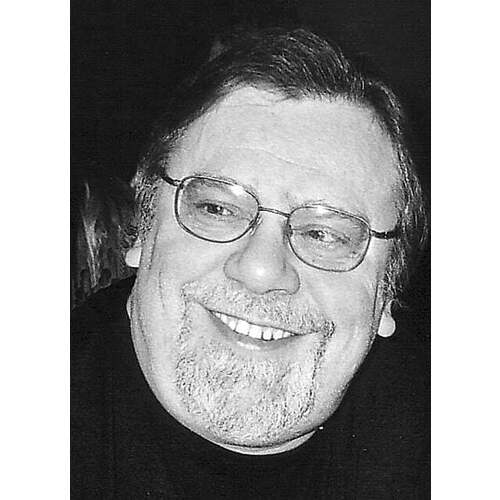
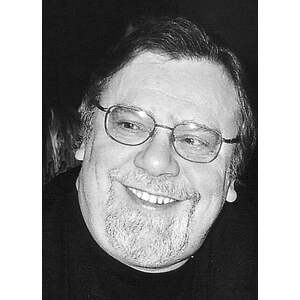
Doug Riley was one of the central musical figures in post-1960s Canadian recording history: a pianist, organist, composer, arranger, producer, musical director, studio musician, bandleader, and the creative force behind Dr. Music. Known widely by the nickname “Dr. Music,” Riley worked across jazz, R&B, rock, pop, gospel, television, film, ballet, orchestral writing, and commercial music, leaving a vast imprint on Canadian music even when his name was not always visible to the public.
Douglas Brian Riley was born in Toronto on April 12, 1945. A prodigiously gifted pianist from childhood, he began serious musical training early and studied at the Royal Conservatory of Music with Lawrence Goodwill, later continuing in Montreal with Paul de Marky. He returned to the Royal Conservatory to study with Patricia Blomfield Holt, and at the University of Toronto studied composition with John Weinzweig and ethnomusicology with Mieczyslaw Kolinski. Under Kolinski, Riley also pursued postgraduate work on the music of the Iroquois, an unusually broad academic background for a musician who would later become known for his fluency in popular, commercial, and jazz settings.
In his teens, Riley entered Toronto’s working R&B scene as a member of The Silhouettes, performing at the Blue Note on Yonge Street. That environment gave him practical experience far beyond the conservatory: nightly club work, backing singers, adapting quickly to changing repertoire, and learning how jazz, R&B, soul, and early rock and roll functioned on stage. By the mid-1960s he was also writing commercial jingles, working with figures such as Mort Ross, Tommy Ambrose, and Larry Trudel through Trudel Productions. This combination of classical technique, university composition, club-band flexibility, and commercial studio discipline became the foundation of Riley’s later career.
Riley’s influence widened dramatically in the late 1960s. In 1968 he worked as arranger and second keyboard player on Ray Charles’ album Doing His Thing, an important early indication of the level at which Canadian studio musicians were beginning to operate internationally. Around the same period, Riley became deeply involved in Toronto recording, arranging, production, television, and session work. He worked with Dianne Brooks, Moe Koffman, Motherlode, David Clayton-Thomas, Anne Murray, Gordon Lightfoot, Klaatu, Dan Hill, Sylvia Tyson, Walter Rossi, Sweet Blindness, The Brecker Brothers, Bob Seger, and many others.
One of Riley’s key early production associations was with Motherlode, whose 1969 hit ‘When I Die’ became one of the defining Canadian soul-pop records of its era. Riley’s role in that world was not limited to performance; he was helping shape arrangements, studio sound, and the professional infrastructure around Toronto popular music. He was one of the musicians who could move comfortably between a jingle session, a television bandstand, a jazz date, a rock album, and a full-scale arrangement.
Riley’s best-known public identity emerged through Dr. Music. In 1969 he was hired as arranger and pianist for CTV’s The Ray Stevens Show and assembled a large vocal and instrumental ensemble for the program. When the show ended, the group continued as Dr. Music, a Riley-led collective that blended jazz-rock, gospel, R&B, pop, and horn-driven studio sophistication. The group’s 1972 self-titled GRT album brought together a large Toronto cast including Steve Kennedy, Bruce Cassidy, Barrie Tallman, Don Thompson, Terry Black, Brenda Gordon, Brian Russell, Doug Mallory, and others. Songs such as ‘Sun Goes By’, ‘One More Mountain To Climb’, ‘Gospel Rock’, and ‘Try A Little Harder’ helped establish the group on Canadian radio.
Dr. Music changed rapidly from one record to the next. The 1973 Dr. Music album, often referred to as Dr. Music II, featured a leaner lineup with Doug Riley, Keith Jollimore, Steve Kennedy, Barrie Tallman, Doug Mallory, Michael Kennedy, and Wayne Stone. Its material moved deeper into jazz-rock and funk, with extended arrangements on pieces such as ‘Long Time Comin' Home’, ‘On The Road’, ‘In My Life’, ‘6-5’, ‘Tryin' Times’, ‘Doctor Doctor’, ‘Rollin' Releases’, and ‘Where Do We Go From Here’. By 1974’s Bedtime Story, the project had become more overtly jazz-fusion oriented, with Riley joined by musicians including Don Thompson, Claude Ranger, Bruce Cassidy, Keith Jollimore, Steve Kennedy, Doug Mallory, and Michael Craden.
The Dr. Music catalogue shows Riley’s unusual ability to use a band as a flexible creative organism rather than a fixed lineup. In one form, Dr. Music could be a large gospel-rock vocal ensemble; in another, a compact jazz-rock band; in another, a studio fusion project. The 1977 Radio Canada International transcription album presented Riley as leader with Barry Tillman, Tom Szczesniak, Bob McClaren, Keith Jollimore, Steve Kennedy, and Doug Mallory, while the 1984 Canadian Talent Library project Dr. Music, Circa ’84 revived the name for a contemporary studio mini-LP featuring Wayne St. John, Terry Black, John Rutledge, Bob Mann, Dominic Troiano, Tom Szczesniak, Dave Piltch, John Anderson, Bob McLaren, Doug Riley, and Lou Pomanti. Through all of these versions, Riley remained the constant: organizer, producer, keyboardist, arranger, and musical centre.
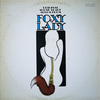
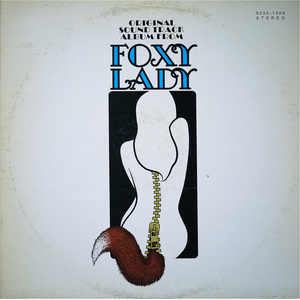
Riley also composed for film. His soundtrack work included Foxy Lady, Cannibal Girls, The Naked Peacock, Shoot, and Dreams of America. The 1971 Foxy Lady soundtrack, released by GRT, is an early example of Riley’s screen writing, combining instrumental themes, pop-rock song material, and vocal features by Rhonda Silver, Terry Black, and House of Commons. The album was recorded at Toronto Sound Studios, with music produced and arranged by Riley, engineered by Terry Brown, and executive produced by Ivan Reitman.
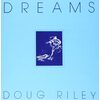
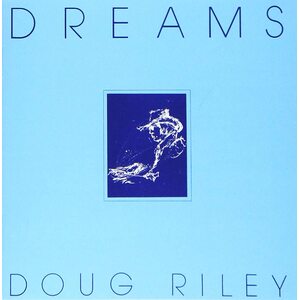
Outside Dr. Music, Riley’s jazz work became increasingly important. His 1976 album Dreams placed him in a stark, modern quartet setting with Michael Stuart on tenor and soprano saxophones, Don Thompson on acoustic bass, and Claude Ranger on drums. The album included Riley’s ‘In My Life’, ‘Earth’, and ‘Blue Dream’, Frank Zappa’s ‘Chunga's Revenge’, and Thompson’s side-long ‘Dreams’. It showed Riley not as a commercial arranger or television musician, but as a serious contemporary jazz pianist working inside extended improvisational forms.
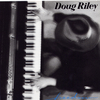
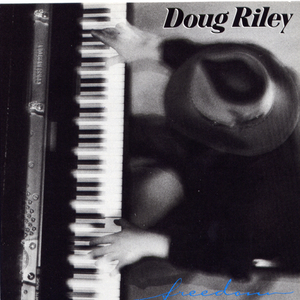
Riley’s own later recordings continued to reveal different sides of his musicianship. Freedom, released by Duke Street Records in 1990, presented him in a solo piano setting, moving through original pieces, Oscar Peterson’s ‘Hymn To Freedom’, Joe Sample and Wilton Felder’s ‘The Way We Was’, and Bill Dobbins’ ‘Roads Travelled & Days Gone By’. In the 1990s and 2000s he recorded and performed in small-group settings, including Con Alma with Phil Dwyer, A Lazy Afternoon with Guido Basso, Come Sunday with P.J. Perry, and Stride with Tyler Yarema and John Roby.
His work as an arranger extended into classical and concert settings. Riley arranged Beatles material for Ofra Harnoy, worked on Gershwin material for Andrew Davis, Jeanne Baxtresser, and Julius Baker, and wrote larger-scale compositions including ballet scores, chamber works, concertos, and symphonic jazz pieces. His compositions included scores for Lies, Wishes and Dreams, Sessions for Six, Jeux en blanc et noir, the musical Mandragola, Rollright, a piano concerto, Concerto for String Quartet and Woodwind Doubler, Baroque Suite No. 1, and the four-movement Prince Edward Island Suite.
Television remained another major part of Riley’s career. He was arranger and pianist for The Ray Stevens Show and Rolling on the River, and served as musical director for programs including Music Machine, Tommy Ambrose’s Celebration, The Wolfman Jack Show, Ronnie Hawkins’ Honky Tonk, and television specials featuring Anne Murray, Lou Rawls, and others. His television work required the same qualities that defined his studio career: speed, precision, versatility, leadership, and deep musical literacy.
Riley’s later public career brought greater recognition to a musician long known inside the industry. In the 1990s he focused more heavily on live performance, including quartet work with saxophonist Phil Dwyer, and became closely associated with Prince Edward Island, where he spent part of each year while continuing to record, perform, and compose. He also served for more than two decades as musical director for Famous People Players. In 2003, he was appointed a Member of the Order of Canada. Jazz Report named him jazz organist of the year repeatedly through the 1990s.
Doug Riley died in Calgary on August 27, 2007. His career is difficult to summarize because it did not run along a single track. He was a jazz pianist, but also a television arranger. He was a producer, but also a sideman. He was a composer of concert music, but also a writer of jingles. He led Dr. Music, but also spent decades strengthening other people’s records from inside the studio. Few Canadian musicians moved so easily between commercial music, serious jazz, pop production, television, film, and composition, and fewer still left such a broad imprint across the country’s recorded sound.
-Robert Williston
Tracks
29 tracks
Foxy Lady (Original Soundtrack) (1971)
Showing 10 of 13 tracks
-
Overture
-
To be Part of You (vocals: Rhonda Silver)
-
Leander's Theme
-
Savin' Grace
-
Vander Fox Foundation
-
Hero's Theme
-
Ridin' a Daydream (vocals: Terry Black)
-
Love Theme
-
C'mon Baby (Just be With Me Tonight) (vocals: House Of Commons)
-
Police Anthem
Dreams (1976)
5 tracks
-
In My Life
-
Chunga's Revenge (Frank Zappa)
-
Earth
-
Blue Dream
-
Dreams
Freedom (1990)
Showing 10 of 11 tracks
-
Peace Dance
-
Hymn to Freedom
-
The Way We Was
-
Child Eyes
-
Shoot
-
Jazz Etude
-
Theme for Adele
-
Freedom
-
Jump for Joy
-
Roads Travelled & Days Gone By
Discography
Featured Titles
Albums
Compilation Tracks

Gallery
Images
1 image
Doug Riley
Media
Videos
0 videos
No videos available for this artist.