Artist / Band
Mary O’Hara Margaret
Biography
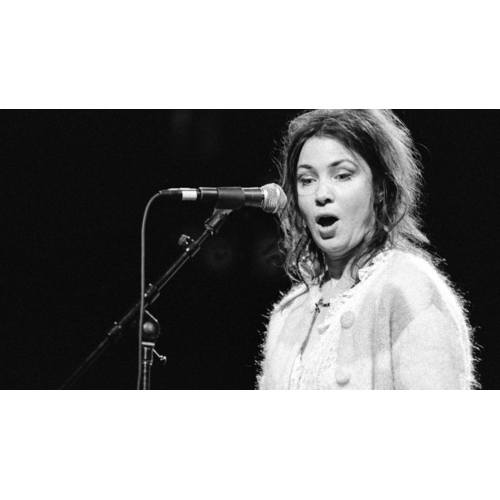
Born in Toronto and shaped by the city’s late-1970s art-school and club circuits, Mary Margaret O’Hara emerged as a performer whose work resisted conventional song form from the outset. After studying at the Ontario College of Art, she began singing and acting locally, first with the soul-pop group Dollars and later as a central member of Songship, soon renamed Go Deo Chorus. Within that band she developed the improvisational vocal style and elastic approach to structure that would become her signature, writing much of the group’s material before leaving in 1983 to pursue her own work.
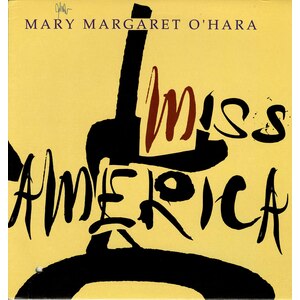
Signed to Virgin Records on the strength of demo recordings made with Go Deo Chorus, O’Hara entered a prolonged and often frustrating recording process that spanned several years. Label expectations collided with an artist unwilling to simplify or formalize her instincts, and sessions were repeatedly stalled or abandoned. When Miss America finally appeared in 1988, co-produced with guitarist Michael Brook, its title was chosen in deliberate contrast to the music it contained—an album that sounded nothing like the assumptions bound up in those two words. Built from slow-burn ballads, jazz-inflected rhythms, country-tinged harmonies, and abrupt shifts in tone and pacing, the record presented a voice that could move from tenderness to abrasion within a single phrase, often sounding as if it were being discovered in real time.
Although Miss America did not conform to mainstream commercial logic, it was received with near-immediate reverence in Canada and Europe and gradually took on the status of a cult classic. Over time it has been cited by artists across genres and generations, praised for its emotional directness and refusal to settle into fixed form. Polls and retrospective lists would later rank it among the most important Canadian albums ever released, while O’Hara herself became a touchstone figure for musicians drawn to risk, improvisation, and unfiltered expression.
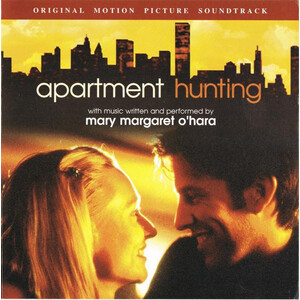
Rather than follow the expected arc of a recording career, O’Hara moved selectively and laterally. Her only release under her own name in the years following Miss America was the Christmas EP, and she appeared sparingly on record, contributing vocals to projects by artists such as Morrissey, This Mortal Coil, Gary Lucas, and others. She also continued acting, with roles in films including Candy Mountain, and remained a compelling live performer, known for concerts that blurred the line between composition and spontaneous invention. In 2000 she composed and recorded the music for the feature film Apartment Hunting; although released as a soundtrack, the work is often regarded as her second major recorded statement.
Famously resistant to the pressures of the music industry, O’Hara has never been prolific, but her influence has far outweighed the size of her discography. Public admirers have ranged from Michael Stipe, who once introduced her onstage as a national treasure, to countless musicians who have cited Miss America as a formative record. The sister of actor Catherine O’Hara, she has nonetheless carved out a reputation entirely her own—an artist whose legacy rests not on output or visibility, but on the enduring power of a singular voice and a body of work that continues to resonate.
-Robert Williston
Tracks
11 tracks
Miss America (1988)
Showing 10 of 11 tracks
-
To Cry About
-
Year in Song
-
Body’s in Trouble
-
Dear Darling
-
A New Day
-
When You Know Why You're Happy
-
My Friends Have
-
Help Me Lift You Up
-
Keeping You in Mind
-
Not Be Allright
Discography
Featured Titles
Albums
Gallery
Images
1 image
O’Hara, Mary Margaret
Media
Videos
0 videos
No videos available for this artist.