Artist / Band
Tom Northcott
Biography
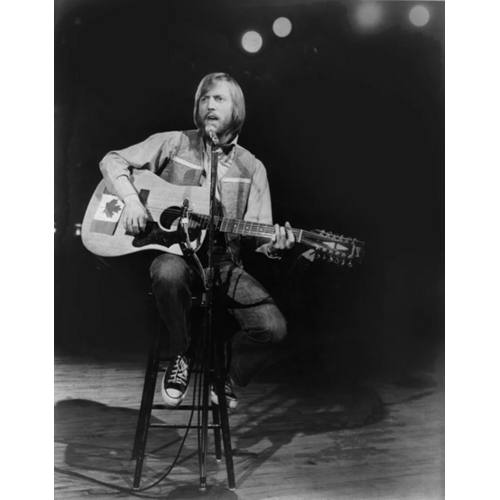
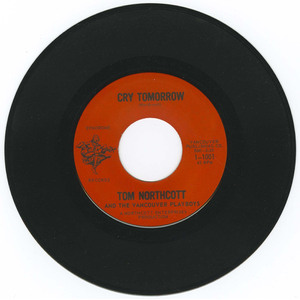
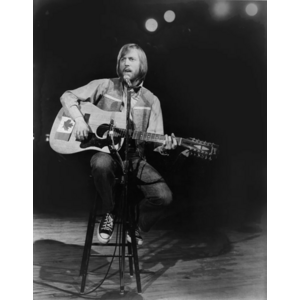
Tom Northcott was born in Vancouver on August 29, 1943, and by his late teens he was singing in the coffeehouses of Kitsilano with a twelve-string guitar and a high, clear tenor. In 1965 he took over the microphone from Ronnie Jordan in the Vancouver Playboys, a matching-suits instrumental band that had been working the province since 1962. That same year he did something few Vancouver musicians had tried: he started his own record label. Syndrome Records' first single paired 'Cry Tomorrow' with 'She Loves Me, She Loves Me Not,' credited to Tom Northcott and the Vancouver Playboys, and the venture was sharp enough that Warner executives in Los Angeles took notice.
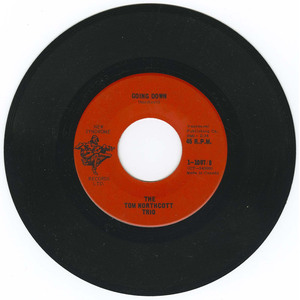
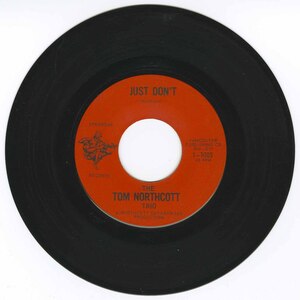
By the end of 1965 he had left the Playboys and formed the Tom Northcott Trio with drummer Chris Dixon and bassist Rick Enns. Their first single, 'Just Don't,' a warning to parents, teachers and anyone else with opinions about young people's hair, came out in December and climbed to No. 15 on CKLG in January 1966. 'Goin' Down' followed that summer, reaching No. 12 on CFUN and No. 49 nationally in RPM. The trio became regulars on CBC Television's Let's Go, packed clubs like the Afterthought, and took their act to San Francisco and Los Angeles.
Northcott renamed his label New Syndrome, and through Let's Go he met singer Howie Vickers of the Classics and an eighteen-year-old Susan Pesklevits. The three recorded 'It's True' as the Eternal Triangle, a slice of baroque pop that reached No. 16 on CFUN in September 1966. It was Pesklevits's first record. She later married Terry Jacks and formed the Poppy Family, and Vickers was fronting the Collectors.
Warner Bros. signed Northcott as a solo artist, and A&R man Lenny Waronker put him in the hands of the label's Los Angeles house team. His version of Donovan's 'Sunny Goodge Street,' released in May 1967, was produced by Waronker and Leon Russell, who wrapped the song in harp, calliope, accordion, strings and horns. Northcott later recalled that Glen Campbell, James Burton, Larry Knechtel and Jim Gordon played on the session. He softened two of Donovan's drug references to get it on the radio, and it worked. The single went to No. 1 on CKLG in August 1967, reached No. 20 in RPM, and picked up airplay as far afield as San Jose, Sioux Falls and Spartanburg. The B-side, 'Who Planted Thorns in Miss Alice's Garden,' was one of his own and drew airplay of its own.
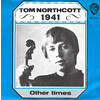
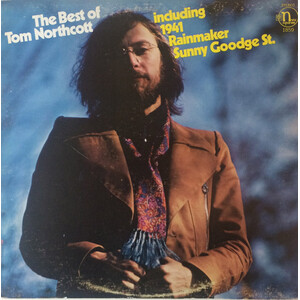
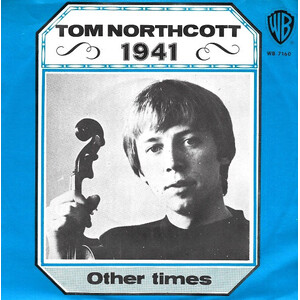
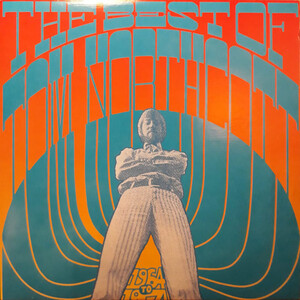
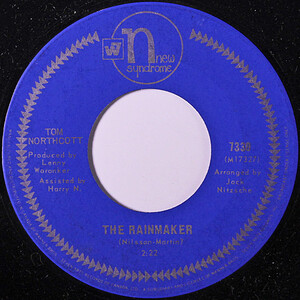
Harry Nilsson's '1941' gave Northcott his only Billboard Hot 100 entry, No. 88, in early 1968, and Bob Dylan's 'Girl From the North Country,' backed with John Hartford's 'Landscape Grown Cold' with Burton on dobro, went to No. 7 on CKLG that August. He opened for the Who and the Doors in Vancouver that year, played the Retinal Circus and Winterland, and sang on Lulu's television show Where It's At. Not everything made it out. He recorded material by Buffy Sainte-Marie and Randy Newman in Los Angeles in 1968, including Newman's 'Somebody Always Gets Hurt,' which Newman never released himself, and in 1969 he recorded at Pye Studios in London with Tony Hatch. Jack Nitzsche arranged his version of Nilsson's 'The Rainmaker,' which went to No. 2 in Vancouver, and Albert Hammond's 'Make Me an Island,' arranged by Perry Botkin Jr., was among his later Warner releases. A ten-song Best of Tom Northcott was issued in Canada only in 1970.
Northcott came home with a bigger plan. He and Jack Herschorn had been partners since 1966, when they launched New Syndrome and the publishing company Jack and Jill Music. In 1969 the two of them and Ralph Harding grew that business into Studio 3 Productions on West 12th Avenue in South Kitsilano, a recording studio, production company and record company rolled into one, with New Syndrome and Capilano as its labels. The studio was fitted out with equipment bought from Western Recorders in Los Angeles, and in 1970 chief engineer Tap Suo-Anttila built it a sixteen-track console. RPM called Northcott the anchor man of the operation, working as writer, producer, performer and sometimes engineer, and New Syndrome landed a worldwide distribution deal with MCA. His orchestral pieces 'And God Created Woman' and 'Lifesong' were taken up by the Vancouver, Edmonton, Hamilton and Regina symphony orchestras, and his composition 'We Will Find Love,' recorded by Ann Attenborrow for Polydor, won the 1970 Moffat Award for best middle-of-the-road record.
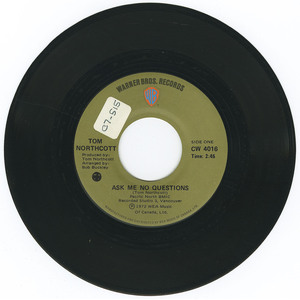
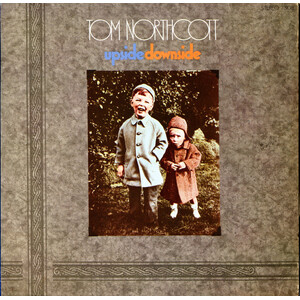
His own 'Crazy Jane,' issued on New Syndrome (NS-106) in 1970 and closing on a long 'Hey Jude' style coda, became his biggest national hit, reaching No. 12 in RPM and No. 2 on its Canadian content chart. He worked it hard, flying to Calgary that July to play Summer Town '70, the teen fair held alongside the Stampede, where more than sixty thousand people came through the gates. Randy Newman's 'I Think It's Going to Rain Today,' co-produced with Barry De Vorzon, followed into the Top Five in Vancouver, and in 1971 UNI released his studio album Upside Downside. About half the songs were his, alongside Leonard Cohen's 'Suzanne,' Newman, and the Move's 'Blackberry Way.' The album reached No. 58, 'Suzanne' went to No. 8 on the adult chart, and Gerry Goffin and Carole King's 'Spaceship Races' became his eleventh and last Top 30 hit in Vancouver. At the Junos in February 1971 he was nominated as top folk singer, in a field with Joni Mitchell that Bruce Cockburn won, and as top male vocalist, the award going to Gordon Lightfoot. A final Warner single in 1972, his own 'Ask Me No Questions' backed with Tom Paxton's 'The Last Thing On My Mind,' was recorded at Studio 3 and produced by Northcott himself.
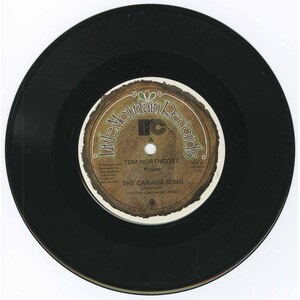
He was far from finished. A run at the Progressive Conservative nomination in Vancouver Centre in the 1972 provincial election ended when his papers were filed too late, and once he had his release from WEA he started another label, Fifi La Flamme's Record Company. Its first single, his own 'Born To Boogie,' was a high-energy rocker cut at Studio 3 in 1973 with Bob Buckley on piano, Robbie King on clavinet, Eddie Patterson on guitar, Doug Edwards on bass and Kat Hendrikse on drums. That December he was touring Western Canada with Bachman-Turner Overdrive, with manager Brian Cassidy lining up eastern dates for the new year and an album of his symphonic works planned for the fall of 1974. Eventually he did step away from performing. He worked as a commercial fisherman on the B.C. coast, later pursued an unsuccessful political campaign associated with Social Credit, and went to law school, building a career in maritime and admiralty law. Music stayed with him. 'The Canada Song' came out on Little Mountain in 1980, 'The Trouble With Love' on Axe, listed as a 1988 release and charting in 1990 and 'Total Emotion' on Neptoon in 1990, and in 1993 he released the album So... You Thought You Heard It All. In 1997 he recorded Joyful Songs of Leonard Cohen, his own album of ten Cohen songs.
He was inducted into the BC Entertainment Hall of Fame in 2008. In 2012 Rhino Handmade issued Sunny Goodge Street: The Warner Bros. Recordings, a limited edition of 3,500 copies compiled by Andrew Sandoval, with unreleased tracks from Los Angeles and from Tony Hatch's sessions at Pye in London, and a cover by Vancouver poster artist Bob Masse. Tom Northcott is retired.
-Robert Williston
Tracks
38 tracks
-
Cry Tomorrow
-
She Loves Me, She Loves Me Not
-
Going Down
-
The Sky's Cold Tears
-
Just Don't
-
Let Me Know
-
Sunny Goodge Street
-
Who Planted Thorns in Miss Alices Garden
-
1941
-
Other Times
-
Girl From The North Country
-
Landscape Grown Cold
-
Crazy Jane
-
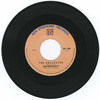
The Collector
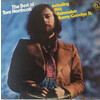
The Best Of (1970)
10 tracks
-
1941
-
Cities Make the Country Colder
-
Sunny Goodge Street
-
Landscape Grown Cold
-
Night in the City
-
Girl of the North Country
-
Who Planted Thorns In Miss Alice's Garden?
-
The Rainmaker
-
High Hope
-
And God Created Woman
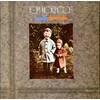
Upside Downside (1971)
Showing 10 of 11 tracks
-
Spaceship Races
-
We Will Find Love
-
Old Kentucky Home
-
Suzanne
-
Blackberry Way
-
Crazy Jane
-
I Think It's Going to Rain Today
-
A Better Way
-
These are Not My People
-
It's True
-
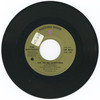
Ask Me No Questions
-
The Last Thing On My Mind
The Canada Song (1980)
1 track
-
The Canada Song
Discography
Featured Titles

Albums
Singles
Compilation Tracks
Gallery
Images
1 image
Northcott, Tom
Media
Videos
0 videos
No videos available for this artist.