Artist / Band
Next
Biography
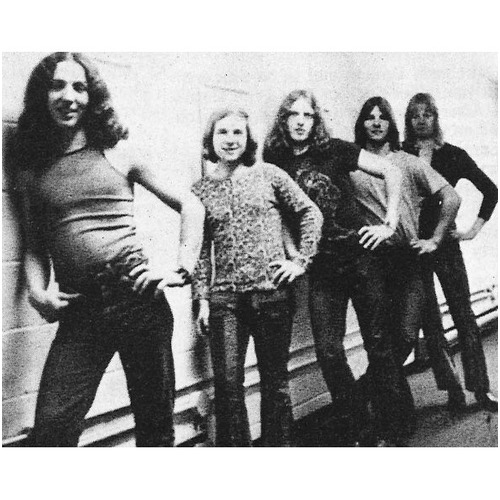
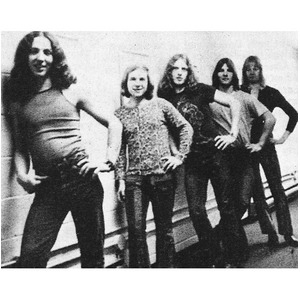
Next was the final line-up of The Fifth working under a new name. The Fifth grew out of The Saints, a teenage band from Winnipeg Beach and Gimli, moved to Winnipeg in 1966 and spent the late 1960s as one of the city’s biggest draws, opening for The Beach Boys, The Byrds and Paul Revere & the Raiders and running through a long list of members, Kurt Winter among them before he joined The Guess Who. By 1970 organist James Grabowski was the only original member left. Ralph Watts had come in on guitar, and George Belanger, a St. Boniface singer who had already fronted Satan and the D-Men and Nickels and Dimes, was singing lead. Brian Sellar on bass and Al Johnson on drums completed the band.
Soon after the 1970 single ‘Tobacco Road’, the musicians learned that the name The Fifth belonged to their manager, Peter Stone. When they parted with Stone the name stayed with him, and the five carried on as Next with a set of original songs.
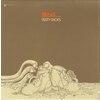
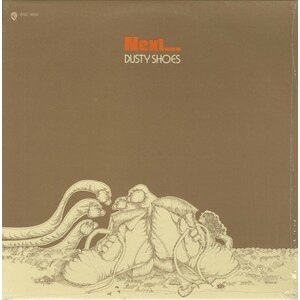
Kinney Music of Canada, the Canadian arm of Warner Bros., was only starting to sign domestic acts, and Next became one of the first projects of John Pozer, the company’s first A&R man. Pozer signed the band to Warner Bros. and produced Dusty Shoes at Studio A of Eastern Sound in Toronto, with John Stewart engineering. All nine songs are credited to the band, and the cover was drawn by Graphic Phenomena.
Kinney launched the record in Winnipeg in the last week of 1971. National promotion manager Tom Williams flew in to work with the band’s manager, Bruce “Bones” Rathbone, and publicist Jerry Shore on a week of events: a press party at the Wreck Room, interviews with the daily papers, the college press, CBC, CFRW and CKRC, and two live remotes on the same day, one with CFRW at Eaton’s and one with CKRC in the record department at the Bay, where the band signed autographs and albums were given away. RPM reported that both of the city’s Top 40 stations were playing the album hard and that it was selling briskly. In February 1972 Manitoba’s Lieutenant-Governor, W. J. McKeag, and his wife hosted a reception for the album at Government House, the first time the official residence had been opened to a pop group. Kinney president Ken Middleton, Pozer and Williams flew in for the party, and the band’s parents were among the guests. That winter Next also shared a bill at Winnipeg’s Playhouse Theatre with the touring Bugs Bunny Revue from New York.
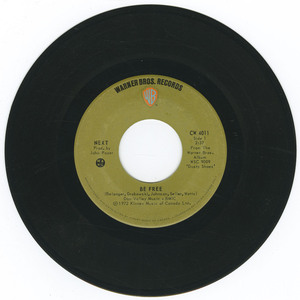
Released as Warner Bros. WSC 9009, Dusty Shoes is about 35 minutes of organ and guitar hard rock, with Watts and Grabowski trading lead lines under Belanger’s high, gritty voice. ‘Which Way?’ opens with a barking dog and heavy riffing, ‘Take Me With You’ stretches out into blues boogie, and the long title track moves from a progressive introduction into a rural, acoustic stretch. ‘Be Free’, the shortest and most commercial song, became the single. RPM’s January 1972 review called the album a nice surprise for heavy rock fans and picked out the title track, ‘They Should Care’ and ‘What Have I Done’.
Dusty Shoes entered the RPM 100 album chart in early February 1972 at No. 93 and climbed to No. 64 by the end of the month, where it held for two weeks. In March, CFAR in Flin Flon had ‘Which Way?’ at No. 6 on its chart.
Next kept working into the mid-1970s. A month in Eastern Canada opening for the Downchild Blues Band turned out to be their last tour; by the end of it the band was close to splitting for lack of commercial success, and Belanger’s agent called to say a new Winnipeg group called Harlequin needed a singer. He flew to Toronto the next day, auditioned in a nearly empty hotel bar in Kirkland Lake, Ontario, and got the job in 1975. He sang on all of Harlequin’s hits and has fronted the band ever since.
Dusty Shoes was the only album Next released.
-Robert Williston
Tracks
10 tracks
Dusty Shoes (1972)
9 tracks
-
Which Way?
-
What Have I Done
-
Take Me With You
-
They Should Care
-
Strange Mood
-
Dreams
-
Be Free
-
Don't Let Go
-
Dusty Shoes
You & I (1976)
1 track
-
You & I (stereo)
Discography
Featured Titles
Albums
Singles
Gallery
Images
1 image
Next
Media
Videos
0 videos
No videos available for this artist.